Get Full Government Meeting Transcripts, Videos, & Alerts Forever!
Get email alerts on the Capital Spending topic
No spam. Unsubscribe anytime.
Presenter outlines Article 10: roughly $16.6 million for town capital projects
Summary
A presenter at a town meeting described Article 10, a proposed capital package of about $16.6 million to replace vehicles and equipment, fund facility repairs and recreational upgrades; part of the package is tied to ballot question 7 and borrowing that would need a two-thirds vote.
A presenter at a town meeting described Article 10 as a proposed capital spending package totaling approximately $16.6 million to maintain and improve town infrastructure, including vehicle and equipment replacements, facility repairs and upgrades to recreational assets.
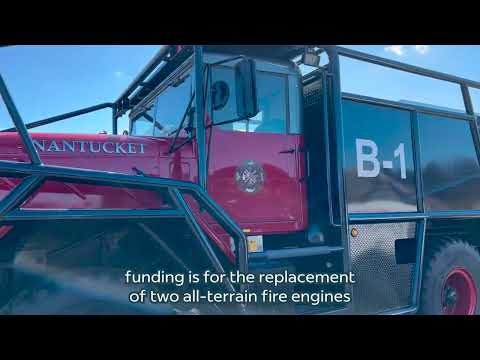
The presenter said a portion of the Article is subject to a capital exclusion and requires approval under ballot question 7. That excluded funding was described as covering the replacement of two all-terrain fire engines for the fire department, several vehicle and equipment replacements, and other new vehicles and facility repairs for town departments.
The presenter emphasized the operational benefits, saying these investments would help town departments “continue to provide services safely and efficiently.” Using a sample assessment, the presenter gave a tax-impact example: for a year-round property valued at $1,878,950 that qualifies for a residential exemption, the tax bill for this Article would increase by about $52.90 for one year if the capital-exclusion measure is approved.
On funding, the transcript records two closely related totals: an initial figure of $16,642,500 and a later referenced amount of $16,600,000. The presenter then outlined the funding mix tied to the $16.6 million figure: roughly $3.7 million would be raised through the tax levy and other general revenues pending approval of the capital exclusion; nearly $7.0 million would come from free cash; a smaller portion from special revenue funds; and the remaining $5.9 million would be financed through borrowing.
The presenter noted that because borrowing is involved, that portion of the funding would require a two-thirds vote for approval.
Next steps recorded in the presentation: the capital-exclusion portion requires voter approval under ballot question 7 and the borrowing element requires the supermajority vote described by the presenter. The presenter did not provide additional detail about timing, nor did the transcript record a named staff member or elected official making the presentation.