Get Full Government Meeting Transcripts, Videos, & Alerts Forever!
Get email alerts on the Traffic Speed Limits topic
No spam. Unsubscribe anytime.
Rowlett residents, staff weigh safety and study before any speed‑limit cut on Rowlett Road
Summary
A Rowlett work session reviewed a traffic speed study showing average speeds in the low‑to‑mid 40s and mixed compliance; residents urged lowering the limit to 35 mph for safety, while staff and some council members asked for accident data, enforcement and targeted measures before changing posted limits.
Noah Wardrobe, a longtime Rowlett resident, urged the council during citizen input to reduce the speed limit on Rowlett Road to 35 miles per hour, saying heavy pass‑through traffic and frequent high‑speed crashes are damaging local streets and endangering neighbors. “When that street gets in the shape that it is getting into, it's going to come out of this budget,” Wardrobe said, and he showed photos of property damage from collisions.
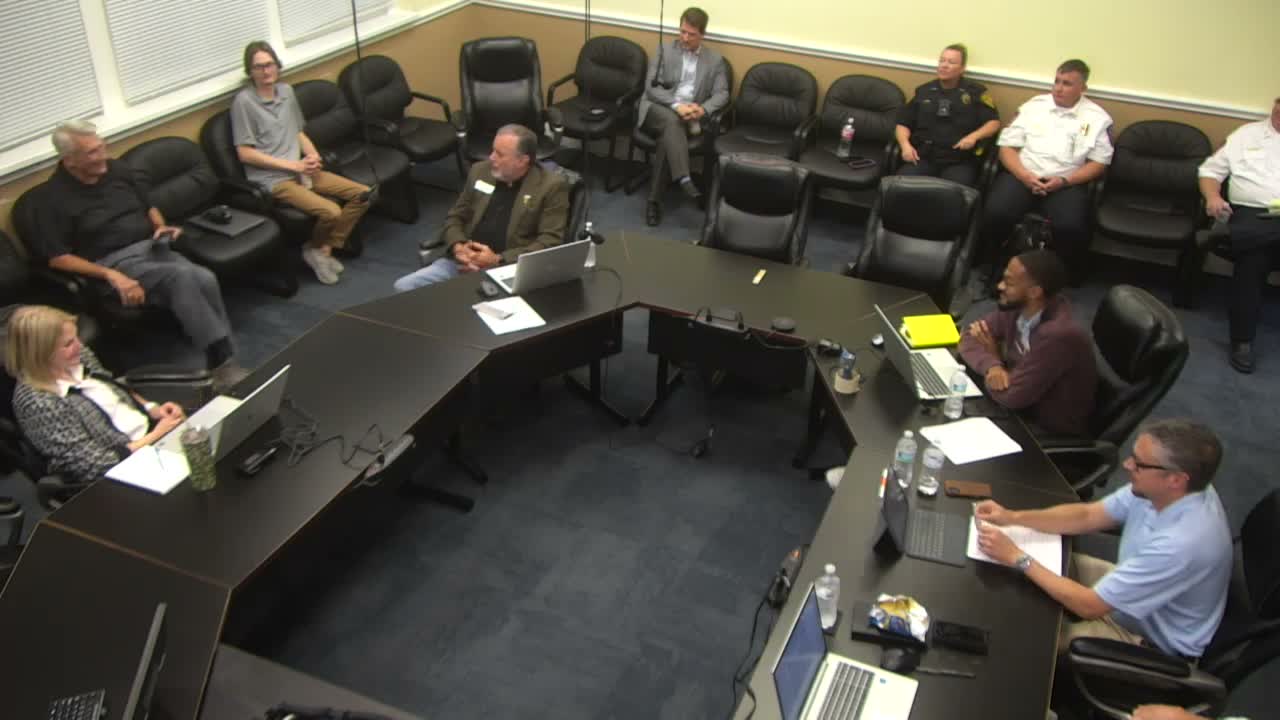
Deputy manager Christophe Bauer presented the city’s speed study during the work session, summarizing engineering findings gathered at six locations over a two‑week period. Bauer said overall driver compliance with the 40 mph limit was roughly 58 percent and that average recorded speeds at the sampled locations were between 40 and 50 mph. From an engineering perspective, he said, the roadway is a four‑lane, median‑divided facility with few curves and the recommendation from city traffic staff and engineers was to maintain the existing 40 mph limit.
Council members pressed staff on study methods and next steps. Several asked whether the data collectors used in the survey displayed drivers’ speeds — an effect that can temporarily lower speeds — and whether units recorded both directions. A staff member clarified the study used four data collectors deployed north and south of State Highway 66, that the collectors recorded traffic in both directions and that none of the deployed units displayed speed to the public during collection.
Debate among council members focused on competing objectives. Some members emphasized safety at a specific stretch northbound off the bridge near Miller Road, suggesting a geographically targeted 35 mph zone there. Others questioned whether a five‑mile‑per‑hour reduction would materially reduce traffic volume or pavement degradation, noting that vehicle volume, weight and start‑stop traffic are major contributors to roadway wear. One councilor said, “If you start putting somebody down there nearly every day, they're gonna slow down,” urging stepped‑up enforcement rather than an immediate blanket limit change.
The council directed staff to compile accident history tied to speed, provide enforcement data, confirm device deployment and return with additional analysis and options. Staff noted accident data and broader signal‑timing improvements will be part of a follow‑up presentation. No formal action or vote was taken; council members said they want more information before altering the posted speed limit.