Get AI Briefings, Transcripts & Alerts on Local & National Government Meetings — Forever.
Brownfield board recommends reimbursement agreement for Hanchet housing project; EGLE coordinator outlines assessment, grants and loan options
Loading...
Summary
The Brownfield Redevelopment Authority voted to recommend a reimbursement agreement tied to a proposed Hanchet/Deschano housing development and heard Andrea, EGLE’s Brownfield coordinator, explain site-assessment procedures, $1M grant/loan caps per project and how EGLE funding layers with TIF and MSHDA incentives.
The Brownfield Redevelopment Authority voted to recommend a reimbursement agreement for a planned housing project on the Hanchet property and heard an EGLE brownfield coordinator outline how state site-assessment grants, loans and tax-increment financing can be combined to support the development.
At a meeting where board members approved the Oct. 28 minutes, a city staff member drew attention to the proposed reimbursement agreement and its key terms, saying, “So, at least 10% of the residential units need to be maintained for households earning 120% AMI or less,” and that income‑restricted units could not be offered as short‑term rentals.
The board then considered a motion that the reimbursement agreement between Green Development Ventures (San Diego) be recommended to the city commission. A board member moved the recommendation; the motion was seconded and members present voiced their support. The board noted the agreement carries signature lines for the BRA chair, secretary and the mayor and that both the BRA and the city commission would provide approvals.
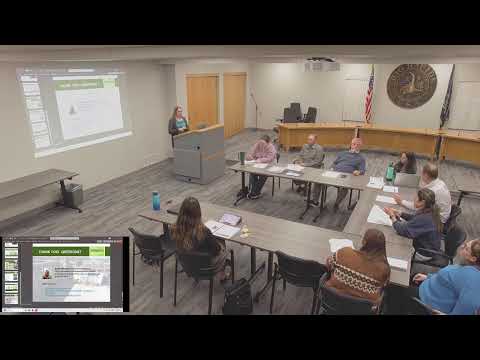
After the procedural action, Andrea, the EGLE Brownfield coordinator for the district, gave a presentation of the agency’s brownfield tools and the typical workflow for a project where environmental uncertainties may exist. “If EGLE’s involved, it’s on the environmental side,” she said, explaining that EGLE typically funds site assessments, due‑care planning and some response activities, while MEDC handles non‑environmental work such as site prep and infrastructure.
Andrea described EGLE’s site‑assessment program as contractor‑driven and locally accessible: EGLE can contract consultants directly so that applicants or developers incur no out‑of‑pocket expense for the assessment report, which then helps define remediation needs and refine cost estimates. She listed consultants the agency commonly works with and said that a developer can, in many cases, be the applicant for a site assessment but that EGLE requires clear local support before it will participate.
On funding, Andrea said local units of government are eligible for one EGLE grant and one EGLE loan per fiscal year for a single project up to $1,000,000 each, and that the program’s statewide funding has been about $15 million in recent years, subject to annual change. She summarized loan terms used by the program: a typical 15‑year loan with the first five years interest‑ and payment‑free, followed by interest at about 1.5%.
Board members and staff discussed timing and technical risks. Andrea noted that assessment results drive whether state funds can be used for specific remediation steps — for example, whether a vapor‑mitigation system is required — and that those details must be established before final budget requests to MSHDA or other programs. She also advised that the city, as property owner in this case, would need to sign an access agreement for on‑site work and that the usual flow of EGLE funds is reimbursement to the grantee (often the local unit) after invoices and backup documentation are reviewed.
The board asked for and received clarification on administrative details: subgrant agreements are recommended to protect the city and to ensure developers provide lien waivers and proof of payment before reimbursement occurs. Andrea said EGLE staff will help prefill and prepare applications and that a typical project proposal process can take months; she said EGLE has up to 90 days to formally approve an application but often pre‑vets items in advance to speed the award.
The meeting closed with board members confirming next steps — including presenting the reimbursement agreement to the city commission and addressing an easement issue with the housing commission — and with a request that staff or a representative be present at the upcoming city commission meeting to explain the agreement and funding mechanics.