Get Full Government Meeting Transcripts, Videos, & Alerts Forever!
Get email alerts on the State Land Use Law topic
No spam. Unsubscribe anytime.
City attorney warns state law changes will alter notice and protest rules for citywide zoning changes
Summary
Rowlett’s city attorney briefed council and P&Z on recent state changes (described in the meeting as House Bill 22) that streamline notice for comprehensive zoning changes, change protest thresholds and provide new sign and electronic‑notice provisions.
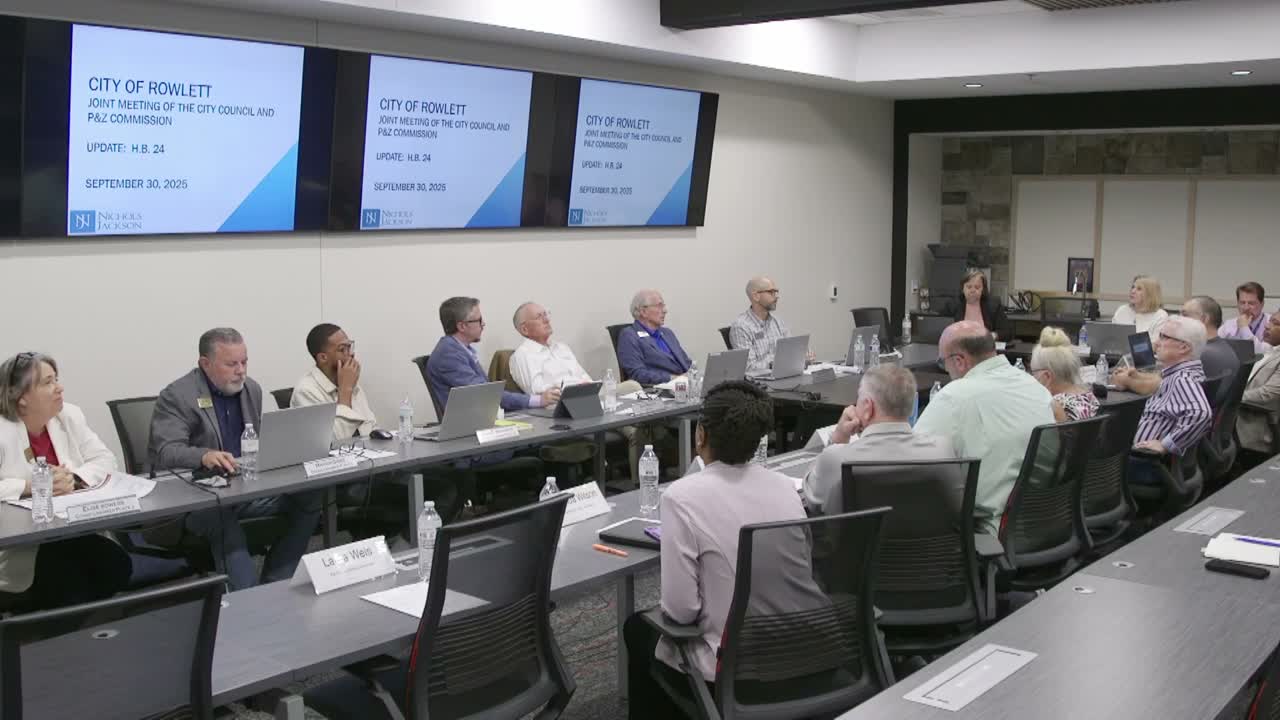
Rowlett’s city attorney, identified in the meeting as Victoria Thomas, gave a detailed legal update on recent state changes affecting zoning notice and protest procedures on Sept. 30.
Thomas explained that a “proposed comprehensive zoning change” (a term added to Local Government Code Chapter 211 and discussed as House Bill 22 in the presentation) can mean several things, including a city proposal to adopt a new zoning code or map that applies citywide, or an overlay that allows more residential development along a major corridor. For such comprehensive changes, Thomas said the statute requires publication in the newspaper and on the city website 15 days before a hearing but does not require the 200‑foot mailed notice that applies to many individual rezonings.
"For a proposed comprehensive zoning change...the notice required is very simple: publish it in the newspaper 15 days before the hearing and post it on the city’s website," Thomas said, describing the narrower notice rules for citywide actions.
She also described how the law alters protest and voting thresholds: certain comprehensive changes that would allow denser residential development make the protest procedure less powerful (a 60% protest threshold applies to parcels within the 200‑foot radius for specified situations, and voter thresholds differ depending on the change). Thomas warned that the new structure makes it harder for protests alone to block some changes and that a final approval can gain a presumption of validity if not challenged within 60 days.
The attorney noted new sign requirements for non‑comprehensive changes: a P&Z sign must be posted at least 10 days before the hearing, be at least 24 inches by 48 inches, and remain posted until council acts (the city’s existing 4‑by‑4 signs exceed this minimum). Thomas also summarized a legal option to establish an online portal for electronic notices, but said the city would still need an acknowledgment mechanism and fallback delivery if a resident does not confirm receipt.
City staff raised the cost of the legally designated local newspaper (the Dallas Morning News) and the expense of required ads. Council and commissioners discussed whether the city could designate alternative publications or multiple papers to reduce costs.
The update closed with a warning from staff and council that the state’s direction favoring higher density could reduce local discretion on certain land‑use outcomes as those laws are implemented or broadened in future sessions.