Get Full Government Meeting Transcripts, Videos, & Alerts Forever!
Get email alerts on the Police Budget topic
No spam. Unsubscribe anytime.
Police commissioner defends $13.4 million increase as council presses on overtime and event billing
Summary
At Buffalo Common Council budget hearings, the police commissioner said the department's $13.4 million budget increase and higher overtime line reflect contractual requirements, vacancies and special events; council members pressed for itemized overtime data, billing for private events and details on a planned vehicle leasing arrangement.
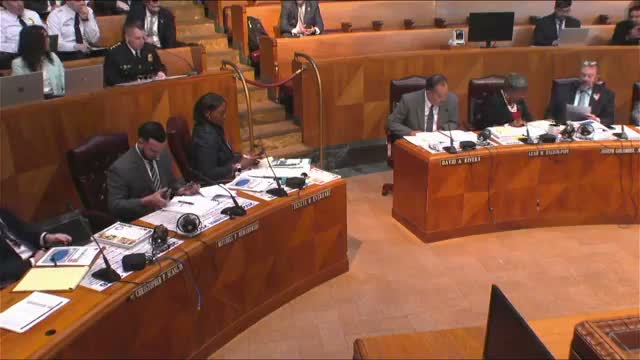
Buffalo Common Council members on April 22 pressed the police commissioner for detailed accounting of a $13.4 million increase in the department's proposed budget, questioning rising overtime and whether private events that require heavy police coverage should pay for that service.
“This budget is not an expansion of services. It is an effort to accurately fund the level of services in the city of Buffalo that is already relied upon each day,” the police commissioner told the council, arguing the overtime requests reflect contractual minimum staffing, vacancies, higher investigative workloads and frequent large-scale events.
Council members repeatedly sought a line-by-line explanation of overtime spending. Council member Wyatt said the public needs clarity about where overtime dollars are being spent, arguing the city should not trade funding for community centers and youth programs to cover police overtime. “When we can find money for overtime … but we can't put money in community centers and youth, I have a problem with that,” Wyatt said.
Majority Leader Halton Pope and others pointed to a prior memorandum of understanding that recommended billing event organizers for police coverage. Pope noted that other cities and the county use event fees to offset staffing costs and said honoring that MOU would help reduce overtime pressure. “We actually created an MOU asking that they would consider billing, for example, the sporting events,” Pope said, urging the administration to advance billing agreements.
The commissioner acknowledged the city does not fully recover costs for some events, citing events funded through JAG grants and saying current billing rates “are not billing true to cost.” The commissioner said the department has tracked event costs and will provide a breakdown to council staff in upcoming budget workshops.
Council members also asked about take-home vehicles and a plan to lease fleet vehicles. The commissioner corrected an earlier figure during questioning: the department currently has 47 take‑home vehicles and will provide a detailed breakdown at the workshop. He said the administration plans a multi-year leasing agreement through Enterprise Fleet to replace medium- and light-duty vehicles, including 62 marked and 46 unmarked vehicles under the leasing option.
On technology and contracts, the commissioner confirmed an Axon body-worn camera contract of roughly $3.5 million; initial years were grant-supported, followed by a 10‑year fixed-rate agreement.
Councilors said they wanted documented evidence showing historical underfunding in overtime lines and asked the administration to identify other department lines historically underbudgeted to balance the books more accurately. The police commissioner said he would supply the requested overtime tracking, event cost breakdowns and vehicle lists at the workshops.
Next steps: councilors closed the public questioning portion and scheduled department workshops to get the requested breakdowns. The hearings were recessed and set to continue April 23 at 2 p.m.