Get Full Government Meeting Transcripts, Videos, & Alerts Forever!
Get email alerts on the Budget Oversight topic
No spam. Unsubscribe anytime.
Council member calls BFSA bond comparison 'farcical' and urges state audit of Buffalo budget
Summary
Council members criticized a Buffalo Fiscal Stability Authority bond comparison for mismatching 10‑year and 30‑year scenarios and backed a resolution asking State Comptroller Tom DiNapoli for an audit to clarify the city’s deficit ahead of budget negotiations.
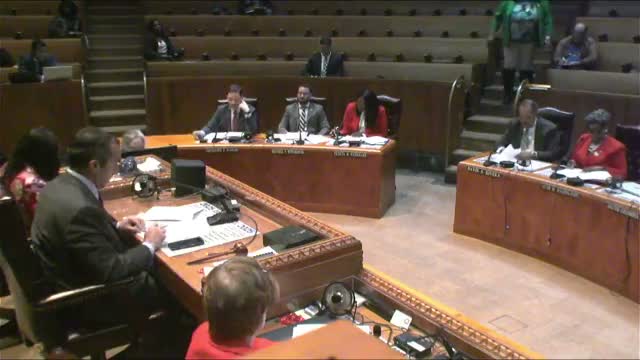
A council member sharply criticized a Buffalo Fiscal Stability Authority (BFSA) financial analysis as misleading and urged clearer, independent accounting of the city’s deficit as councilors prepare for budget negotiations. "This supposed bond comparison analysis is farcical," the council member said, arguing the BFSA compared borrowing $46,000,000 over 10 years with borrowing the same amount over 30 years and presented it as an apples‑to‑apples comparison.
The critique, delivered in chambers by a council member who said the analysis failed to compare like terms, noted that a parking authority would, in many scenarios, shoulder debt repayment through ramp users rather than the city’s general fund. "Anyone who has borrowed money knows that over 30 years you would obviously be paying more if you compare it to a 10‑year mortgage," the council member said, adding that the analysis was "misleading to the public." The speaker recommended comparing identical amortization periods (10, 20 and 30 years) when evaluating options.
Separately, a council member who sponsored a resolution asked State Comptroller Tom DiNapoli to audit the city’s deficit, saying fluctuating figures make it impossible for the council to negotiate a budget. "Give us a number so we can actually do our job," the sponsor said, citing varying published figures and urging an authoritative, third‑party review before budget votes.
Other members supported a narrow review of overtime costs, which some described as a major driver of budget shortfalls. One councilor said overtime has routinely run in the tens of millions and asked the state comptroller to examine whether overtime estimates reflected contractual obligations or operational choices. "We need to know if the facts are the facts," a council member said.
Procedurally, the council adopted a set of resolutions and sent remainder budget and deficit items to the finance committee for further examination; members asked staff to prepare documentation ahead of the finance meeting. The council scheduled committee hearings and public comment sessions to gather additional information and public input before finalizing budget recommendations.
The council’s next steps include committee review in finance and civil service and additional council deliberations; no final budget vote occurred during this meeting.