Get Full Government Meeting Transcripts, Videos, & Alerts Forever!
Get email alerts on the Solid Waste topic
No spam. Unsubscribe anytime.
Republic Services warns recycling remains costly; EPR and polymer processing changing economics
Summary
Rick Bernas of Republic Services updated the consortium on recycling market pressures, saying commodity prices have not recovered since 2017, extended producer responsibility (EPR) laws are shifting costs to manufacturers, and local landfill life varies by site.
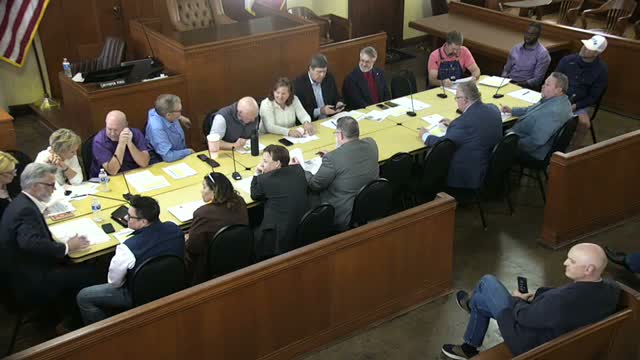
Rick Bernas, a Republic Services representative, told the Rockwall County infrastructure consortium that the recycling market has not returned to pre‑2017 commodity prices and that extended producer responsibility laws are shifting recycling costs toward manufacturers.
Bernas said the March‑era change that some local speakers called “China Sword” reduced export demand and depressed commodity pricing: “China shut their port down and they completely shut everything out from The United States and the world recycling into China,” he said, adding that commodity prices have only partially recovered. He warned that recycling market prices alone no longer offset the cost of curbside collection.
Bernas described extended producer responsibility (EPR) initiatives that assign lifecycle responsibility to manufacturers and noted Republic Services’ investments in polymer processing to create circular plastics. “EPR is forcing it back to the manufacturer,” he said, and described company polymer centers that convert plastic into feedstock for manufacturers.
On local disposal capacity, Bernas gave rough landfill‑life estimates for several nearby sites and said distance to the disposal point affects cost: Greenville landfill was said to have about 100 years of capacity; Garland about 50 years; Nokomis (Dallas) about 50 years; Skyline (Ferris) roughly 10–15 years; North Texas Water District (near Melissa) about 40 years. He cautioned that hauling farther raises per‑ton disposal costs and that traffic and collection density materially affect residential rates.
During a question from a consortium member identified in the transcript as Michael, Bernas said a carbon analysis depends on local factors and landfill pricing; in places where landfill tipping is high, recycling can make more sense economically and environmentally, he said.
Why it matters: rising costs and new EPR laws change how municipalities and haulers plan contracts and recycling services. County staff and elected officials said they will consider these market dynamics when discussing franchise, contract terms and service levels.