Get Full Government Meeting Transcripts, Videos, & Alerts Forever!
Get email alerts on the Homeowners Insurance topic
No spam. Unsubscribe anytime.
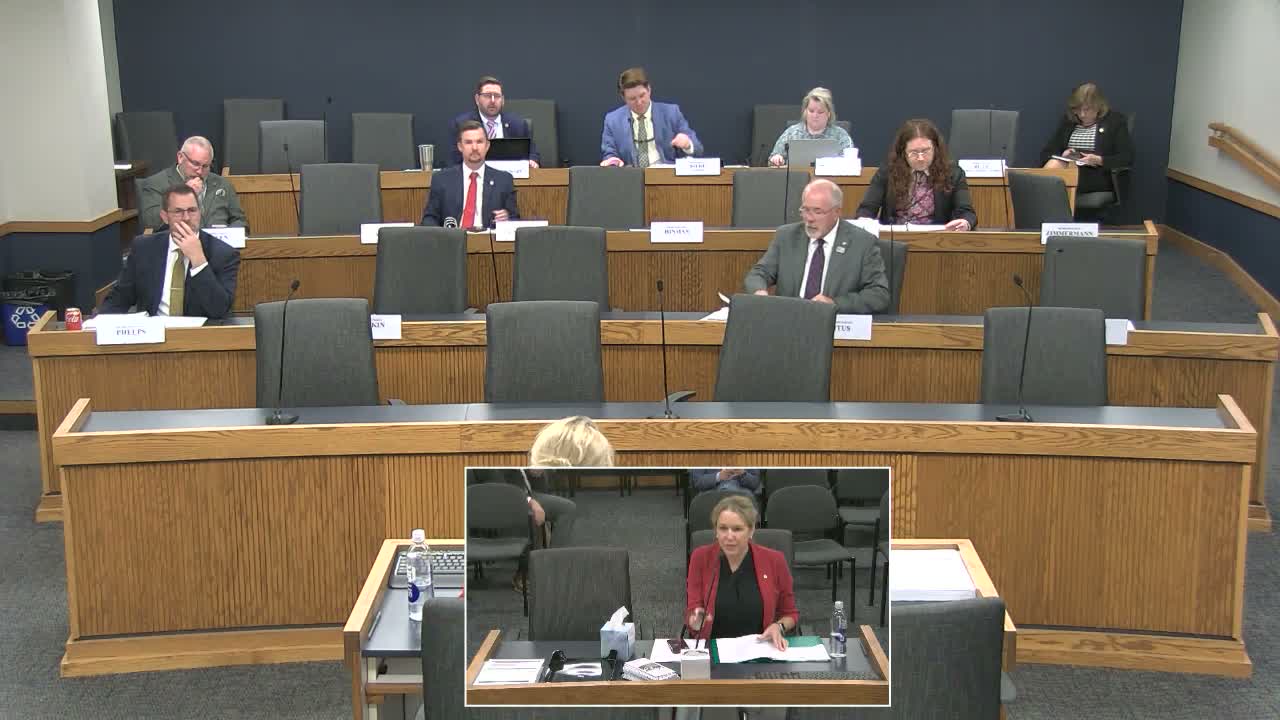
Rep. Jacqueline Zimmerman introduces bill to require insurers to replace whole-home siding when matching panels are unavailable
Summary
Rep. Jacqueline Zimmerman (R-98) told the House Committee on Insurance that House Bill 2,250 would codify Eastern District of Missouri case law and require insurers to cover replacement of all siding on a structure when partial storm damage cannot be matched; industry witnesses warned of possible premium increases and urged disclosure and consumer education.
Representative Jacqueline Zimmerman (98th District) opened the public hearing for House Bill 2,250, saying the bill would require insurers, beginning Jan. 1, 2027, to pay homeowners the replacement cost to replace all siding on a structure when partial damage and unavailable matching siding prevent a reasonably uniform appearance. Zimmerman said the measure “codifies current case law in Missouri” and responds to constituent complaints after a May 2024 hailstorm in parts of the St. Louis area.
Zimmerman told the committee many older houses use siding no longer manufactured, leaving homeowners with mismatched panels if insurers pay only for the damaged side. “Some insurance companies … were only offering to fix the sides that were damaged,” she said, leaving owners to buy matching siding themselves. She cited an Eastern District of Missouri case she said requires whole‑house replacement in similar circumstances and said the Missouri Supreme Court did not take up the appeal, limiting the case’s binding scope to the Eastern District.
Industry representatives pushed back on cost and affordability. Hampton Williams of the Missouri Insurance Coalition said the primary concern is the effect on entry premium rates for homeowners, particularly those on the margin. “When you have folks who are either on the margins to begin with … whether or not they can afford those types of coverage, that’s a question,” Williams said, urging consumer education about available policy options.
Brandon Koch, also with the Missouri Insurance Coalition, described the practical distinction regulators and carriers face between direct physical damage and cosmetic mismatches when matching materials are unavailable: “That’s where the rub is,” he told the committee, noting prior local mandates to wrap houses fully in major storms were associated with premium spikes in the past.
Committee members asked whether product choices (for example, whole‑home coverage riders versus limited coverage) already exist and whether disclosure requirements could help consumers choose the coverage they need. Representative Castillo suggested lay‑person disclosure bullets and said he was open to scope negotiations (for example, limiting replacement to forward‑facing walls). Zimmerman said she was willing to discuss scope and noted some states have statutory language she used as models.
The committee did not vote on HB 2,250 at this hearing; the chair closed the public testimony after hearing opposition and informational witnesses.