Get AI Briefings, Transcripts & Alerts on Local & National Government Meetings — Forever.
Missouri committee hears SB 878 to expand pharmacist authorities, sparking safety and authority questions
Summary
Sen. Travis Fitzwater presented SB 878 to make permanent several pharmacy practices used during COVID, expand pharmacists’ ability to administer certain FDA-approved vaccines, allow device dispensing and rapid testing, and add an OTC provision for ivermectin and hydroxychloroquine with warning labels. Supporters said it improves access; opponents warned it shifts authority from the governor to regulatory boards.
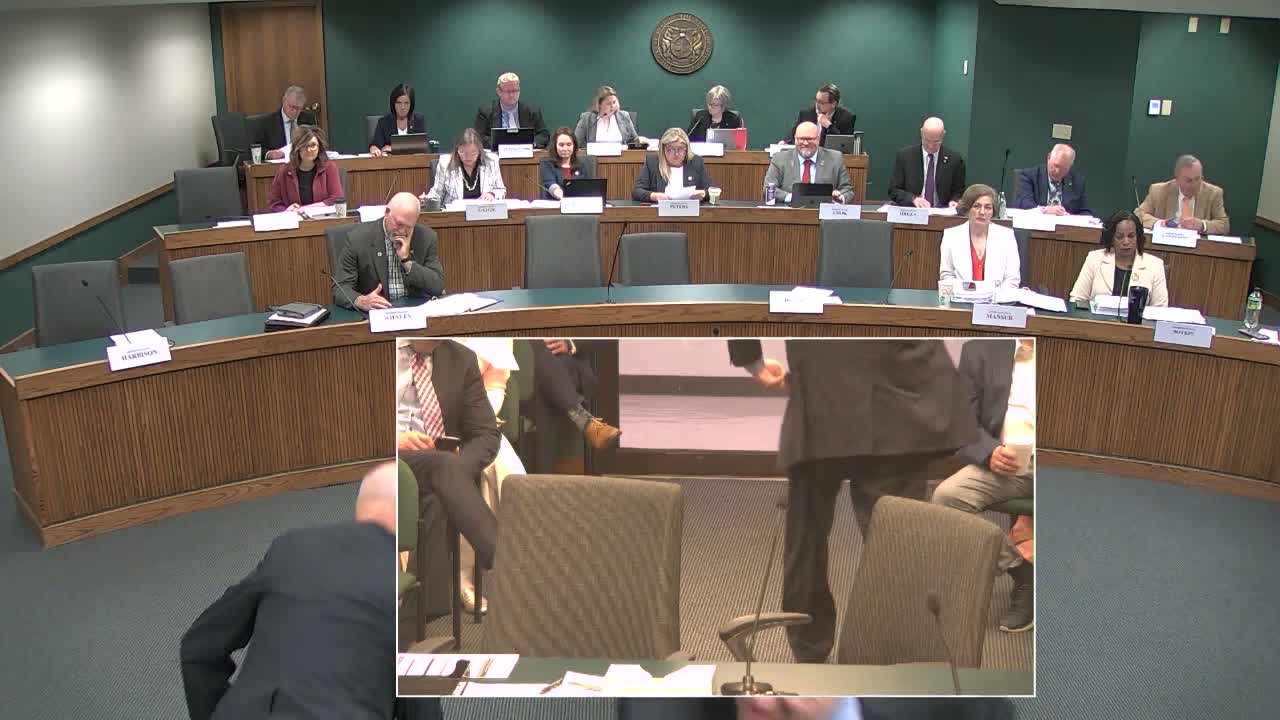
State Sen. Travis Fitzwater (10th Senate District) told the House health committee SB 878 would codify temporary measures used by pharmacists during the COVID emergency and expand statutory authority for pharmacists to provide a wider range of services at community pharmacies.
"This bill was passed, I think, had 1 no vote in the senate... It adds the—you know, when we went through COVID, we... basically took some rules off the table so that pharmacists could make sure they were taking care of patients," Fitzwater said, describing provisions that would put those practices into statute. The bill would maintain exclusions for certain high-risk vaccines and require joint approval by the Board of Healing Arts and the Board of Pharmacy for any vaccine inclusion list.
The bill’s provisions described in testimony included: explicit authority for pharmacists to administer an expanded list of FDA-approved vaccines (with a statutory exclusion list for travel and other specialized vaccines such as smallpox, anthrax, yellow fever and chikungunya); medication-therapeutic-plan authority for pharmacist–patient interactions; authorization for pharmacists to dispense certain medical devices (nebulizers, pen needles) without an additional physician visit; rapid testing for COVID, flu and strep in pharmacies under existing federal authorities; and an amendment passed on the floor to permit over-the-counter sales of ivermectin and hydroxychloroquine only with FDA-approved warning labels and standardized procedures.
Committee members probed safety controls. Representative Haruza asked specifically about hydroxychloroquine’s ocular risks and whether OTC access would ensure patients receive appropriate eye exams; the sponsor said the amendment requires FDA-approved warning labels and board-issued standardized procedures. Representative Schmidt asked about a listed minimum age (age 7) for pharmacist-administered vaccines; Fitzwater said that age threshold already exists in current law to protect very young children.
Industry and professional witnesses testified in support. Henry Itzalomak of the Missouri Pharmacy Association said pharmacy and physician groups negotiated much of the language and that boards would jointly create an inclusion list and treatment protocols. A Walmart representative and Jackie Barjay, a Walgreens lobbyist, said pharmacies increase access through convenient hours and locations and that the bill does not mandate vaccines.
Opponents raised structural concerns about administrative authority. Lisa Pinette of Armour Vine argued the bill continues a pattern begun during COVID of shifting emergency authority from the governor’s statewide standing order to rulemaking by executive boards, which she said risks undermining legislative prerogatives.
The committee closed testimony without recording a committee vote in the transcript. Committee members indicated further review would be necessary, especially on safety guardrails and the question of which vaccines would be included on board-approved lists.