Get AI Briefings, Transcripts & Alerts on Local & National Government Meetings — Forever.
Committee advances bill to direct locally approved early‑childhood sales tax into children’s service fund
Summary
The House Ways and Means Committee voted 7–2 to give House Bill 23‑79 a do‑pass recommendation. The committee substitute would require locally approved early‑childhood sales‑tax revenue to be placed in a children’s service fund, prioritize the poorest children, and limit recipients to eligible providers.
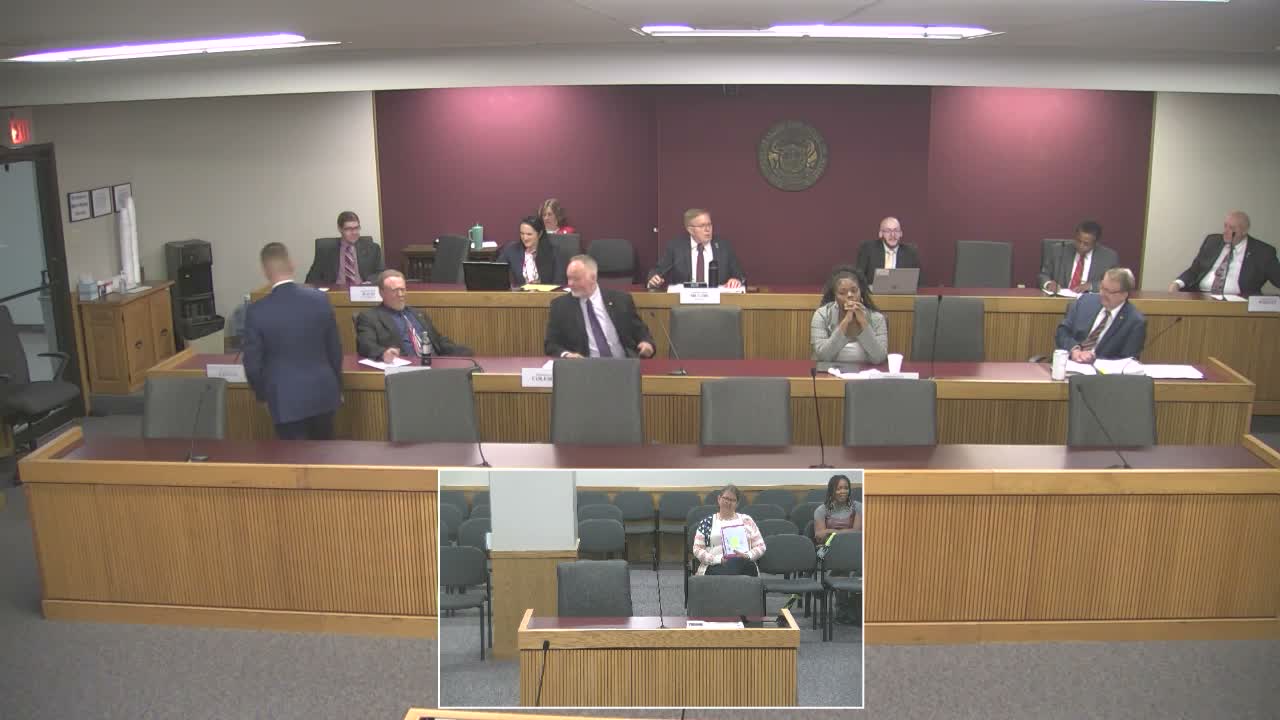
The House Ways and Means Committee voted 7–2 to give House Bill 23‑79 a do‑pass recommendation after an executive‑session hearing in which the sponsor said the substitute clarifies how locally approved early‑childhood sales tax revenue would be defined, managed and spent.
Rep. Cicely Williams, the bill sponsor, told the committee the substitute broadens the existing early childhood fund to explicitly include childcare services, clarifies definitions such as 'board' and 'childcare provider,' shifts custody of those funds to the county treasurer and specifies eligible recipients — licensed providers, DESE‑contracted entities, public schools and other eligible providers. "Essentially, what it updates is, how the money for early childhood programs is defined, managed, and spent," Williams said.
The substitute, Williams said, does not create a tax; it specifies how revenue would be handled if a city or county chooses to put a sales tax for early childhood services before voters. Williams referred to existing ballot language under RSMo 67.547 and said the change is intended to ensure funds raised for early‑childhood purposes are not diverted into general revenue.
Committee members pressed the sponsor on practical effects and fiscal mechanics. Rep. Coleman asked whether the measure simply redirects existing local revenue or would create a new tax; Williams replied the substitute does not impose a tax and that any local sales tax would require a voter referendum. Rep. Matheson noted confusion in earlier testimony between "tax credits" and a "sales tax"; Williams acknowledged a misspeaking and clarified the bill addresses a local sales tax.
Vice Chair Davis raised an equity concern: "We're gonna raise the sales tax for senior citizens who will never receive any benefits," he said, arguing that segregating funds could remove resources otherwise available for general purposes such as roads or parks. Williams rejected that framing and reiterated the bill's focus on targeted oversight and distribution to approved early‑childhood providers.
Other members expressed support for clarity and oversight. Rep. Taylor called the approach "very good" and said dedicating revenues and limiting recipients to DESE‑licensed providers is an "excellent approach" for St. Louis. Rep. Castile and Rep. Tanya emphasized ensuring that locally approved revenue is used as voters intend.
After discussion, the chair called for adoption of the committee substitute and a voice vote. The chair declared the motion carried; the clerk later reported a formal roll call tally of seven in favor and two opposed, giving the bill a do‑pass recommendation from the committee. The committee then adjourned.