Get Full Government Meeting Transcripts, Videos, & Alerts Forever!
Get email alerts on the Sb 1135 topic
No spam. Unsubscribe anytime.
Committee hears testimony on 'Bentley and Mason’s Law,' a bill to require offender payments to children of impaired-driving victims
Summary
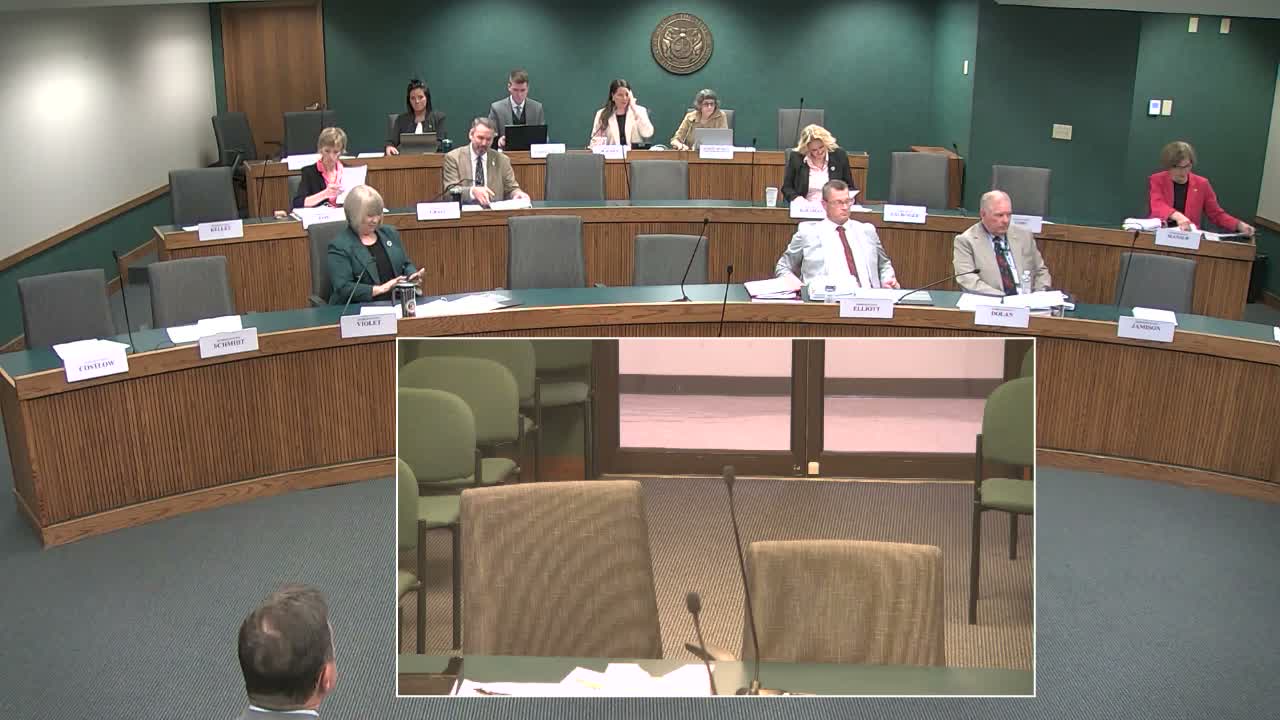
The Committee on Children and Families held a public hearing on Senate Bill 1135 ("Bentley and Mason's Law"), which would allow courts to order offenders who killed a child's parent(s) while driving impaired to pay maintenance for those children until age 18 or until 21 if enrolled in college. Sponsors and victims urged passage; no vote was taken.
The Committee on Children and Families held a public hearing on Senate Bill 1135, known as "Bentley and Mason's Law," a proposal that would let courts order offenders who killed a child's parent or parents while driving impaired to pay maintenance for the surviving children until age 18 or until 21 if enrolled in college.
Senator Henderson, the bill sponsor, told the committee the measure is modeled on existing child-support procedures so a clerk and the court would evaluate an offender's income, assets and the children's prior lifestyle to set payment amounts rather than prescribing fixed sums. "We just tried to go from that," he said, adding the bill includes a one-year delay after release from prison before payments must begin to allow for prisoner reentry.
Henderson said the draft contains a concession: if a family pursues and recovers a civil judgment against an insurer, the bill would bar subsequent collection of court-ordered maintenance to avoid "double-dipping." He acknowledged some language was adjusted in negotiations and said he is willing to discuss further refinements offline.
Committee members sought detail on scope and enforcement. Representative Hausman asked whether "maintenance" would cover health care; Henderson said the bill does not explicitly include health benefits and that survivors' Medicaid or other programs could still apply. Representative Dolan, a judge, urged stronger enforcement mechanisms and flagged the risk that maintenance orders could be discharged in bankruptcy; Dolan said the bill currently might lack sufficient "teeth." Senator Henderson said he would talk further with members about possible enforcement language.
Two witnesses with direct experience urged passage. Brooke Stewart described losing her husband in an impaired-driving crash on Aug. 25, 2023. She told the committee the offender had a blood-alcohol content of 0.281, was sentenced to 10 years, and that a court awarded $113,700 in restitution for her two daughters (Brooklyn: $52,500, to be paid $500 per month over 105 months; Harper: $61,200, to be paid $400 per month over 153 months). "Finding out about Bentley's Law brought a sense of immense relief," Stewart said, adding an appeal was denied and that the ordered restitution will help her daughters pursue higher education.
Heather Elder, a victim-services specialist with Mothers Against Drunk Driving (MADD) in Missouri, testified in support and asked the committee not to amend the bill at this late stage. "This bill is about accountability, protection, and deterrence," she said, and urged prompt passage before the end of the legislative session. Elder also described related prevention proposals her organization supports, including House Bill 1740 ("Melanie's Law"), which would expand felony penalties in multi-fatality crashes and include ignition-interlock provisions.
Members emphasized both the bill's potential to help families and the need to make enforcement effective. Representative Greg asked why the measure has stalled in prior years; witnesses said there has been little active opposition but the bill has repeatedly been delayed in the legislative process.
The hearing concluded with no speakers in opposition and no committee action recorded. The committee adjourned; proponents asked that the measure be advanced without late-stage changes so it can be considered before the session ends.