Get AI Briefings, Transcripts & Alerts on Local & National Government Meetings — Forever.
Elementary leadership team outlines academic and behavior goals, cites early reading gains
Summary
New Glarus elementary leaders told the school board they are scaling tiered academic supports and PBIS behavioral systems, reporting fewer students qualifying for personalized reading plans and wider use of daily interventions and universal behavior lessons.
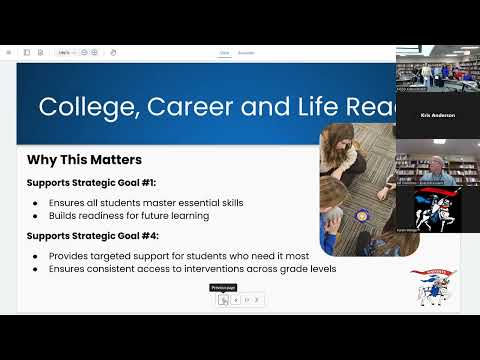
Dr. Eicher introduced the elementary leadership and sustainability team and outlined how the building’s improvement work ties to the district strategic plan. Team members presented two core goals: a curriculum-focused academic goal using tiered supports and a behavior goal centered on PBIS.
Anna Buehler, a member of the elementary leadership team, said the group set goals after reviewing multiple data sources — essential learning outcomes (ELOs), iReady, report cards and referrals — and chose priorities that would represent all grade levels and shared staff. "We looked at a ton of data," Buehler said, describing how grade-level teams use assessment results to pick which students need reteaching and which need additional intervention.
Carrie Hedeman, first‑grade teacher, described classroom strategies: all‑day 4K for younger learners, short targeted one‑on‑one lessons rooted in the science of reading, Heggerty phonemic awareness work and SIPs intervention cycles for tier 3 supports. "Through play, they're starting to develop the foundation for their literacy and math concepts," Hedeman said, noting interventionists have helped several students "graduate out" of SIPs groups this year.
Karen White explained the tier 2 cycle model: assessment, a 10–15 day reteaching cycle with progress monitoring and repeated checks so teachers can document growth. The school set measurable goals for staff: 100% of teams to have tier 2 plans, 90% of cycles following a 10–15 day model, and a stretch target for very high proficiency on ELOs.
Jana Monroe and Jamie Brecklin described PBIS implementation and recognition systems. Brecklin said weekly classroom PBIS lessons and a common language across grades aim to make expectations explicit. "By June 9, when we end school, we will have given out nearly 20,000 night cards in our elementary school this year," Brecklin said, citing the recognition effort as part of an emphasis on positive reinforcement.
Heather McCauley, school counselor, walked the board through behavioral progress monitoring, SABRES screening results and targeted "boosters" (for example, bus boosters) for students who need extra practice. McCauley said the screening data show risk behaviors trending down compared with the start of the year.
The presentation closed with district leaders noting measurable reading gains: the percentage of kindergarten–third‑grade students qualifying for personalized reading plans fell sharply from the previous spring. Board members asked clarifying questions about scheduling (ensuring universal instruction is preserved during interventions) and multi‑year trend data for SABRES; presenters responded that interventions are scheduled so students do not miss universal instruction and that this year’s full three‑time screening will provide richer trend data.