Get AI Briefings, Transcripts & Alerts on Local & National Government Meetings — Forever.
Committee hears bill to create Alaska Invasive Species Council and rapid‑response fund
Summary
Senate Finance took first testimony April 27 on SB 174, sponsored by Sen. Forrest Dunbar, to establish an 11‑member statewide invasive species council inside the Department of Fish and Game and create a fund/subaccount for rapid response; witnesses urged action and agency officials noted capacity and funding constraints.
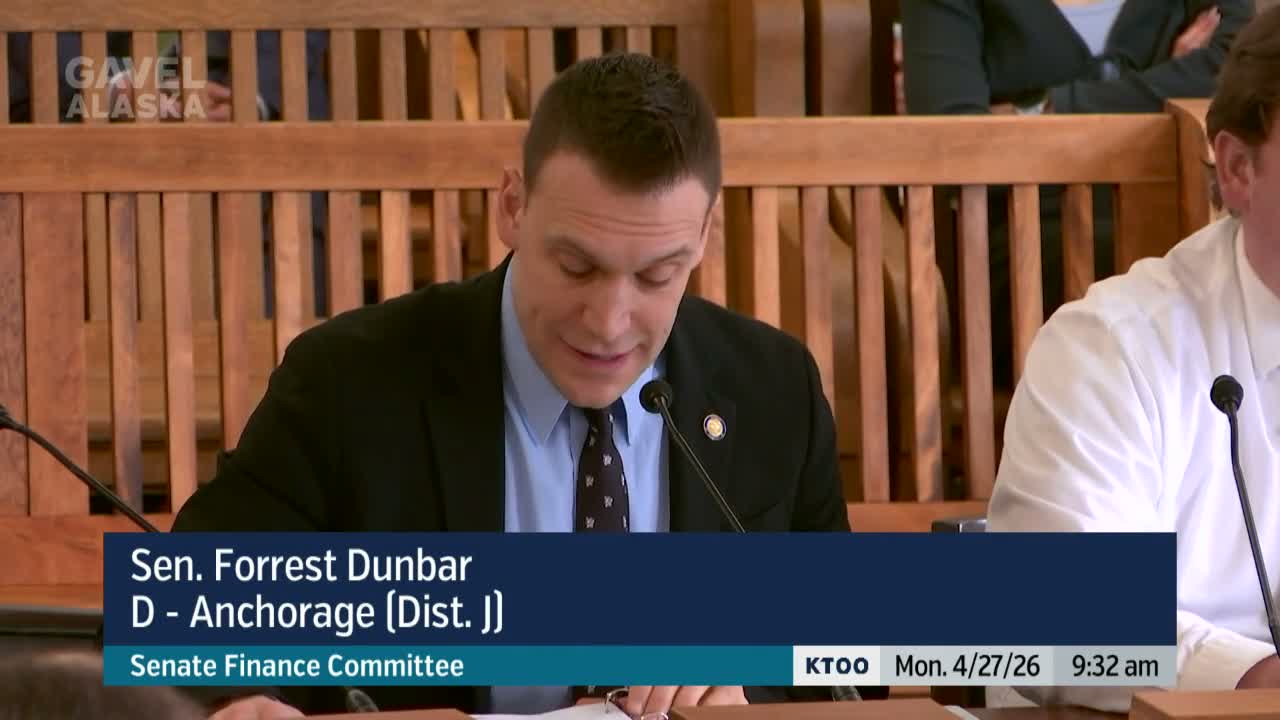
Senator Forrest Dunbar introduced Senate Bill 174 to the Senate Finance Committee on April 27, proposing creation of an 11‑member Alaska Invasive Species Council within the Department of Fish and Game to coordinate prevention, early detection and rapid response to invasive species and to develop a five‑year strategic plan. The bill includes creation of a departmental subaccount for invasive species work and a sunset date of July 1, 2035.
Donna Sanchez, executive director of the Prince William Sound Regional Citizens' Advisory Council, testified in strong support, saying commercial shipping is a known vector for marine invasives and that a coordinated council would improve statewide readiness and information sharing. Dr. Emily Reed, regional invasive plant coordinator with the Southeast Alaska Watershed Coalition, summarized the large and growing economic costs of invasive species and urged funding for staff and rapid response capacity.
"The cheapest and most efficient management strategy is prevention and early detection and rapid response," Dr. Reed told the committee and said a funded council would increase Alaska's capacity to mitigate future costs and harms.
David Martin, a Cook Inlet commercial fisherman, urged passage, citing northern pike impacts and past missed opportunities for rapid eradication. Committee members pressed the department on why a council is necessary if the department already coordinates invasive species work and whether a council would translate into on‑the‑ground response.
Tammy Davis, a program coordinator at the Department of Fish and Game, said the department's invasive species work is staffed by a single statewide position and that community monitoring is underway in Southeast; she confirmed detections of European green crab beyond initial sites. Joe Falckel, deputy director for administrative services at Fish and Game, said SB 174 would create a subaccount where the legislature could appropriate funds for invasive species work and described the department's current coordination across divisions. He and other witnesses emphasized that the bill is intended to create strategic planning capacity and a stronger, coordinated voice to pursue appropriations for eradication and mitigation.
The fiscal note for SB 174 reports funding for one permanent part‑time position with a first‑year cost of approximately $84,600 and ongoing costs thereafter. Senators asked for historical appropriation requests and emphasized the need to ensure any council has access to funding for rapid response rather than remaining an advisory body without resources.
The committee set SB 174 aside for further consideration. Senator Dunbar closed the hearing and the committee scheduled a follow‑up meeting the next morning.
The bill remains under committee consideration; no final vote occurred during this hearing.