Get AI Briefings, Transcripts & Alerts on Local & National Government Meetings — Forever.
Senate finance hears bill to ease leasing and sales of state agricultural land
Summary
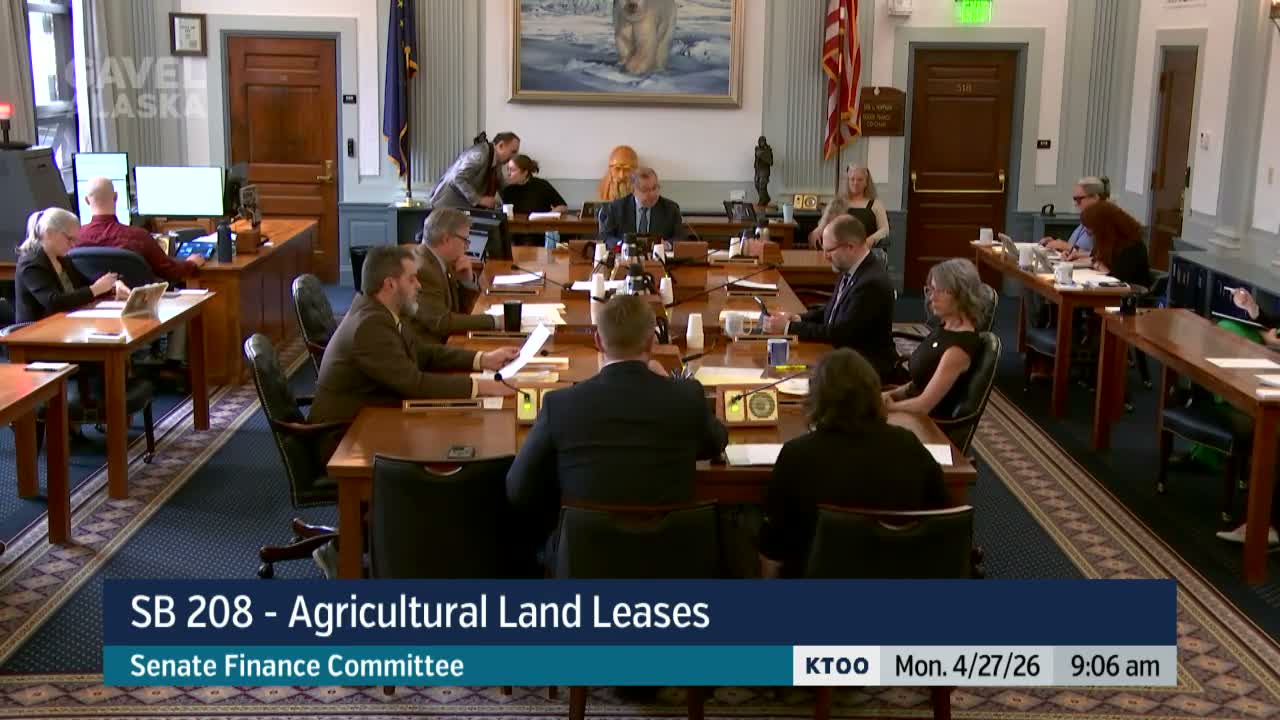
Senate Finance heard testimony April 27 on SB 208, sponsored by Sen. Jesse Bjorkman, which would create a below‑market leasing program for farmers, allow merit‑based sales of agricultural parcels, and give the Department of Natural Resources authority to assess civil penalties to enforce agricultural covenants.
Senator Jesse Bjorkman introduced Senate Bill 208 to the Senate Finance Committee on April 27, proposing changes to make it easier for Alaska farmers to lease and, in some cases, buy state land for agricultural use. The sponsor said the bill creates a new leasing track with lower fees, an optional merit‑based sales pathway and civil penalties to ensure land stays in production.
SB 208 would let farmers identify state parcels and apply to rent them at below‑market rates; costly appraisals and surveys would be required only when the commissioner deems them necessary. The bill also authorizes the Department of Natural Resources to offer a merit‑based component for sales, so agricultural experience and business plans — not only the highest bid — can determine who acquires parcels. Finally, the bill would allow DNR to assess civil penalties to encourage compliance with agricultural covenants instead of repossession.
"I introduced Senate Bill 208 to support Alaska's agricultural industry," Sen. Jesse Bjorkman said in his opening remarks. He framed the measure as three reforms to reduce cost and administrative barriers for farmers while protecting agricultural use on state lands.
Witnesses described practical barriers the bill seeks to address. Amy Zeiss, policy director for the Tobacco Farm Bureau, told the committee SB 208 lowers financial barriers, moves from appraisal‑based valuations toward an agricultural fee schedule, and adds accountability so state land stays in production. Margaret Bassett, land coordinator with Alaska Farm Trust, described FarmLink work that connects prospective farmers to land and said the merit‑based approach would help qualified newcomers secure parcels.
Emily Garrity, owner‑operator of Twitter Creek Gardens, gave a detailed example of the problem SB 208 targets: she said a 27‑acre parcel adjacent to her operation was appraised at $117,000, which produced an annual lease rate of $9,360 for 4.5 acres — more than $2,000 per acre — a price she called "cost prohibitive" for most farmers. Garrity said the appraisal reflected unrestricted development value rather than agricultural value and that SB 208 would create more realistic entry points for new and expanding farmers.
Committee members pressed agency officials about legacy leases and how the new program would interact with existing terms. Rachel Longacre, chief of operations at the Department of Natural Resources, said current active leases remain under their existing terms until renewal; at renewal, holders could opt into the new program, and the department could set regional market rates aligned to agricultural values. Keel asked whether land sold under the bill would carry deed covenants; Longacre confirmed any sold agricultural land would have covenants on the deed.
The fiscal note from the Department of Natural Resources (Division of Water) indicated no incremental cost but noted regulation changes would be required. After questions and discussion, the committee set SB 208 aside for further consideration.
The bill remains under consideration; the committee did not take a final vote. The sponsor and witnesses said they are available for follow‑up questions and offered to provide additional lease histories and details to committee staff.