Get AI Briefings, Transcripts & Alerts on Local & National Government Meetings — Forever.
New York City Council hearing spotlights proposal for Office of Insurance Accountability amid soaring premiums
Loading...
Summary
Council members and business groups urged creation of a city Office of Insurance Accountability (Intro 685) to probe why homeowners, auto, liability and health premiums have risen sharply and to provide consumer assistance and transparency; no vote was taken at the hearing.
At a New York City Council hearing, City Council leaders and business and housing advocates urged creation of a new Office of Insurance Accountability to investigate and improve transparency around rapidly rising insurance costs that officials said are "absolutely too high" and are harming New Yorkers.
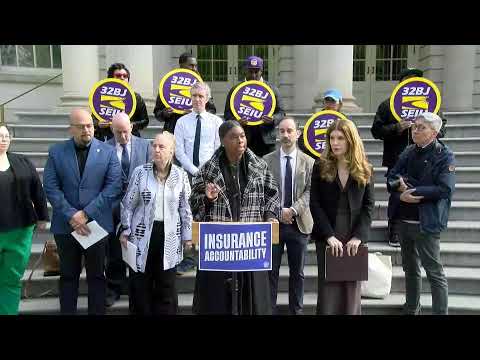
Speaker Menon opened the hearing by saying insurance costs are "absolutely too high and is crushing New Yorkers," and described legislation she introduced in February to create a first-in-the-nation office to "shine a light on pricing and drivers of costs" and to bring insurers, regulators and stakeholders together. She said the office would help consumers with unfair claim denials, intervene on claim delays, and publish data to help the city get better value for taxpayer dollars.
Council Member Linda Lee credited prevention and the city’s purchasing power as levers to lower costs and said greater transparency was needed in both health care and insurance. "We have a lot of buying power. So how do we use that to get better rates, to get better services, and to make sure that money stays in people's pockets?" she said.
Business witnesses told the council the problem is acute for small firms. Anthony Pena, president of the National Supermarket Association, said his group represents roughly 600 independent grocery stores employing more than 15,000 New Yorkers and that members report premium increases often between 50% and 150%, with some businesses struggling to find coverage at any price. "That is particularly harmful...because it is not about the cost. It is also about the stores struggling to find coverages at all," Pena said.
Andrew Ritchie of the New York City Hospitality Alliance said the restaurant and bar sector lost nearly 8,000 jobs over the past year and that premiums are doubling or quadrupling in some cases even when the underlying risk profile has not changed. "This office of accountability can really start to get into the nitty gritty of why these premiums are going up," he said.
Housing advocates raised similar concerns for affordable housing. Brandon Chaney of the New York Housing Conference said an analysis found premiums rising at an average of about 26% annually; he said insuring a single affordable apartment cost roughly $1,770 in 2024 and that insurance alone can account for more than 20% of monthly rent for the lowest-income tenants. "Too many insurers are discriminating against affordable housing and simply refusing to cover it," Chaney said.
Council Member Gail Brewer gave a local example of a middle-income co-op whose annual insurance bill jumped from $93,000 to $303,000 for the same policy in one year and noted much of the policy response may require state action. Brewer said she has a resolution (Resolution 387) urging support for state legislation sponsored by Jamal Bailey to create an affordable housing insurance relief fund targeted at income-restricted units.
Council Member Harvey Epstein, chair of the Consumer and Worker Protection Committee, said the city needs a place where residents and businesses can resolve insurance-related problems and where the city can identify root causes behind large increases. He expressed hope for "quick passage" of Intro 685 but no vote or formal action was recorded in the hearing transcript.
Speaker Menon said the proposed office would be housed in the Department of Consumer and Worker Protection and that the council had already spoken with that agency; she pointed to the city’s earlier health care accountability office and an Emblem-related plan that was estimated to save the city about $1 billion as a model for potential savings, but she did not provide a timeline for when New Yorkers would see measurable reductions in premiums.
The hearing compiled testimony from elected officials, industry groups and housing advocates urging greater transparency, enforcement and consumer assistance to address what multiple speakers called steep and opaque premium increases. No formal vote was taken at the session; committee consideration and potential next steps were not specified in the transcript.