Get Full Government Meeting Transcripts, Videos, & Alerts Forever!
Get email alerts on the Math Education topic
No spam. Unsubscribe anytime.
Proposal would require 60 minutes of daily math instruction, universal screening and improvement plans in Alaska schools
Summary
House Bill 237 would set statewide expectations for daily math instruction time, universal screening, evidence‑based curriculum and targeted plans for struggling students; national advocates and research groups testified that similar reforms have produced measurable gains elsewhere.
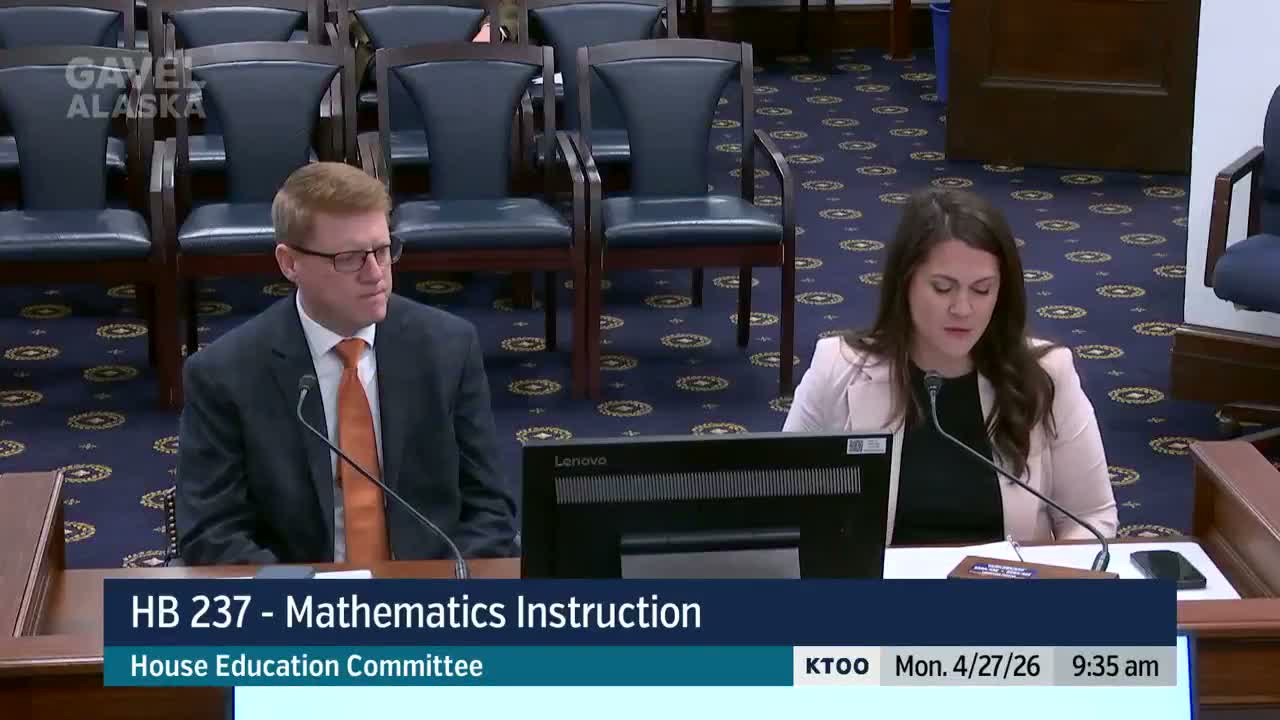
Rep. Jubilee Underwood presented House Bill 237 to the House Education Committee on April 27, describing a package of measures aimed at improving math outcomes: universal screening and progress monitoring, a minimum of 60 minutes of daily math instruction in early grades, approval of evidence‑based curriculum and assessments, individualized improvement plans for students who are behind, and guaranteed pathways to advanced math.
"Math is a language of opportunity," Underwood said, arguing that stronger foundational instruction prepares students for technical careers and higher‑paying jobs. Buddy Witt, staff to Rep. Underwood, introduced invited testimony from Excel in Ed.
Lindsey Henderson, senior policy director for math at Excel in Ed, presented NAEP data (2024) showing roughly 30% of Alaska fourth‑grade students scored proficient or above. Henderson said the bill’s components mirror evidence‑based reforms used elsewhere — including Alabama’s Numeracy Act — and that reforms emphasizing daily instructional time, screening, high‑quality instructional materials and targeted supports can move outcomes. Henderson recommended math coaches as an important but costly resource; HB 237 does not mandate coaches but includes language establishing credentialing and pathways for math teachers.
Committee members asked about coaching (not included as a required line item), curriculum adoption and implementation costs. Henderson said some states phase in coaches, targeting high‑need schools first; others fund coaches incrementally. Members requested additional data on how districts currently allocate math time, teacher credentials and vacancy impacts. The committee scheduled follow‑up briefings on teacher education and certification and adjourned the hearing without taking a vote.