Get AI Briefings, Transcripts & Alerts on Local & National Government Meetings — Forever.
Senate hearing on repeal of Workers' Compensation Appeals Commission draws split testimony
Loading...
Summary
Sponsor argued SB 251 would save roughly $518,300 by returning workers'‑comp appeals to Superior Court; former appeals‑commission chair and defense counsel warned repeal would remove precedential guidance, burden courts, and reduce predictability for pro se claimants.
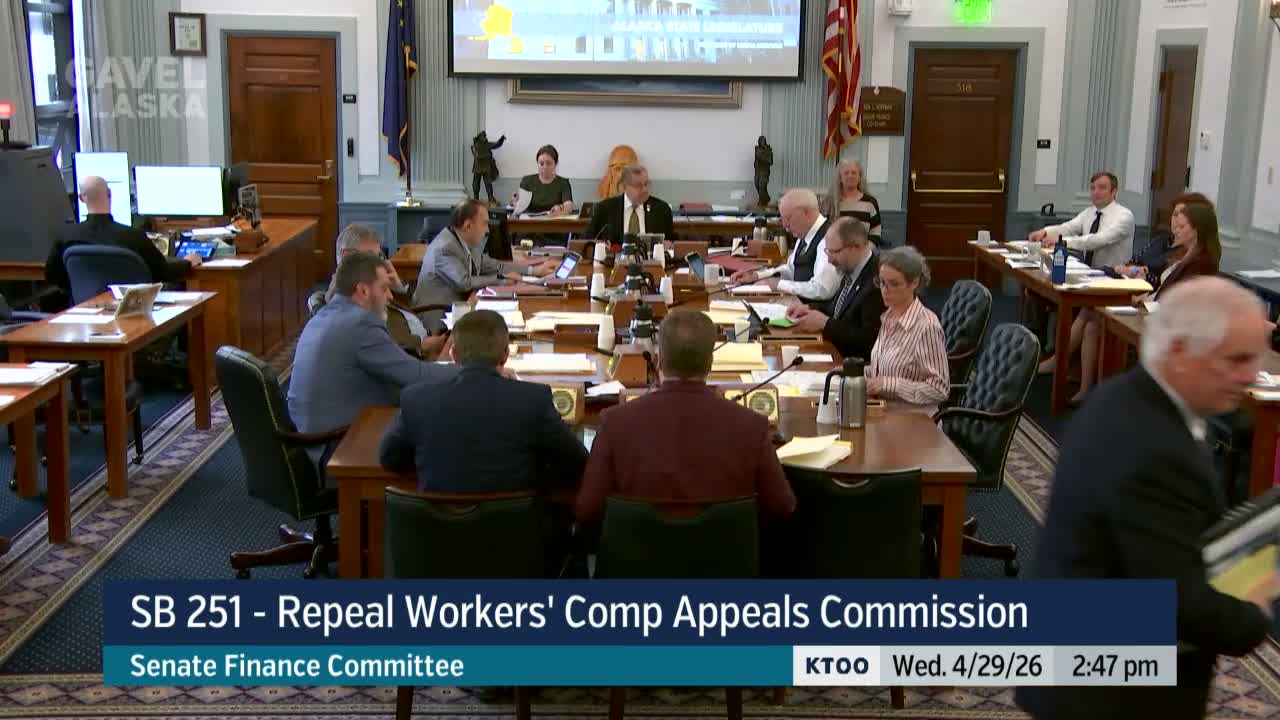
Senate Bill 251, which would abolish the Workers' Compensation Appeals Commission and return appeals to the Superior Court, was presented by sponsor Senator Bill Wilkowsky. The sponsor framed the bill as a cost‑saving measure to shrink government and avoid future tax increases on the business community, estimating annual savings of roughly $518,300 and the elimination of two commission positions.
Two experienced voices in the workers'‑comp arena testified in opposition. Deborah Ford, a retired attorney who previously chaired the appeals commission, told the committee the commission provides precedential decisions that guide the board, litigants and attorneys; she argued the commission's panel decisions reduce uncertainty and help pro se litigants by supplying consistent guidance and clerk support. Martha Tanske, an Anchorage defense attorney, likewise said the commission's subject‑matter expertise promotes predictability and can reduce appeals to the Alaska Supreme Court; she and others warned that transferring appeals to the already‑stretched Superior Court could lengthen delays for injured workers.
Sponsor Wilkowsky responded that historical appeal rates and prior practice support returning cases to the Superior Court and reiterated cost savings; committee members reviewed two fiscal notes with differing agency projections and set SB 251 aside for further consideration.
What happens next: The committee will examine the commission and court fiscal notes more closely and may solicit further information about caseload, precedent production, and potential impacts on access to appellate guidance.