Get Full Government Meeting Transcripts, Videos, & Alerts Forever!
Get email alerts on the Drug Policy topic
No spam. Unsubscribe anytime.
Committee member says lethal strikes on suspected drug boats violate constitutional authority and undercut drug-fighting tools
Summary
A House Judiciary Committee member told a hearing that recent U.S. strikes on suspected drug boats — which he said killed at least 157 people — lack constitutional and legal justification, weaken prosecutions and have been paired with cuts to treatment and enforcement funding, and introduced former OCDETF official Thomas Padden as a witness.
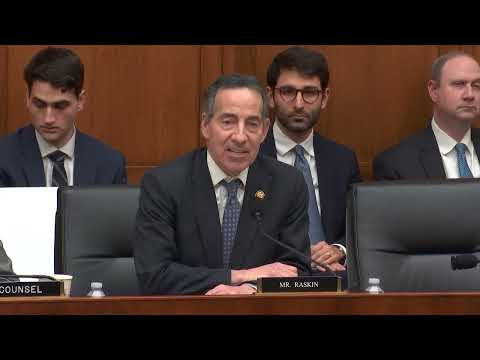
A member of the House Judiciary Committee criticized the administration’s recent strikes on suspected drug-smuggling boats as unlawful, counterproductive and harmful to U.S. law-enforcement efforts, saying during a committee hearing that the actions were taken without a declaration of war and have cost many lives.
"Since the summer, the administration has launched more than 40 strikes on alleged drug boats in international waters, mostly in the Caribbean, killing at least a 157 people," the committee member said, adding that such lethal action should not be undertaken without congressional authorization under Article I, Section 8 of the U.S. Constitution.
The committee member framed the strikes as both "a crime" and "a mistake," arguing that the administration has not provided a plausible legal justification under domestic or international law for using military force to kill people it unilaterally deems to be terrorists. He said lawful alternatives, such as Coast Guard interdiction and criminal prosecution, exist and should be used instead.
The lawmaker also tied the strikes to broader changes he said have weakened U.S. capacity to fight drug trafficking: he asserted more than 5,000 FBI and DEA agents were reassigned to immigration enforcement to meet deportation targets, that Attorney General Bondi eliminated Organized Crime and Drug Enforcement Task Force (OCDETF) strike forces, and that significant funding and staffing cuts to treatment programs and the Substance Abuse and Mental Health Services Administration have reduced the country’s ability to respond to addiction.
"We don't blow them out of the water with a hellfire missile," he said, arguing that destroying lower-level actors at sea destroys witnesses needed to indict higher-level traffickers. He also criticized presidential pardons of high-profile figures — citing Juan Orlando Hernandez and Ross Ulbricht — as actions that, in his view, undercut enforcement efforts.
The committee member pointed to claimed declines in overdose deaths — saying opioid and fentanyl overdose deaths fell from 80,000 in 2023 to 54,000 in 2024, and citing large percentage declines in West Virginia and Wisconsin — to argue that public-health approaches and treatment deserve priority over military strikes.
He introduced Thomas Padden, described in the transcript as the former acting director of OCDETF, as a witness who could testify about the efficacy of coordinated task forces and the dangers of dismantling those tools. The member urged restoring mental-health funding, supporting rural hospitals and refocusing enforcement on investigating and prosecuting traffickers rather than using lethal military strikes.
The hearing proceeded with the witness expected to provide further testimony; the committee member closed his remarks and yielded back to the chair.