Get Full Government Meeting Transcripts, Videos, & Alerts Forever!
Get email alerts on the Environmental Health topic
No spam. Unsubscribe anytime.
NIEHS announces $10 million, five-year research program for East Palestine health tracking; investigators outline tests, enrollment and data protections
Summary
NIH/NIEHS and university partners said they will spend $10 million over five years on community-engaged health research in and around East Palestine Village, including blood and hair biomonitoring, spirometry, FibroScan liver ultrasound and state-level registry work; investigators emphasized confidentiality and plans to return results to participants.
NIEHS officials and lead university investigators on Monday detailed a $10 million, five-year, community-engaged research program to track health outcomes following the 2023 East Palestine derailment.
Dr. Kyle Walsh, director of the National Institute of Environmental Health Sciences, said NIEHS used an accelerated funding mechanism to move money quickly to “get boots on the ground” and support local research. "There has been a $10,000,000 commitment to fund research in, in and around East Palestine," Walsh said.
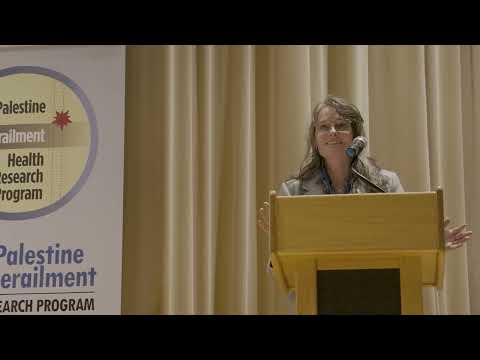
Lead principal investigator Dr. Erin Haines of the University of Kentucky described the health-tracking study, which currently follows about 400 participants. The team will collect survey responses and biologic samples to monitor respiratory, cardiovascular, mental-health and reproductive outcomes, and will pair those data with geospatial analyses and state health registry information. "We called it the health tracking study," Haines said, noting the team is revising instruments after listening sessions with residents.
Investigators described specific measures they plan to administer: validated adult and child surveys, spirometry for lung function, arterial-stiffness measures for cardiovascular monitoring, hair cortisol for stress screening and blood panels to examine immune, liver and thyroid function. Dr. Juliana Baer outlined the liver- and thyroid-focused work and described a mobile FibroScan ultrasound that will measure liver stiffness in the community. Baer said the FibroScan events can be done in East Palestine and that results and explanatory letters will be returned to participants with phone numbers for follow-up care.
Enrollment and incentives: organizers said adults and children ages 8 and older are eligible for blood testing; the FibroScan will be limited to participants age 15 and up because of equipment constraints. Survey incentives will be $25; clinic visits including liver screening were described as $100–$150 depending on procedures, and a separate FibroScan visit carries a $50 incentive. Residents can sign up via QR code, online or in person at the Weigh Station study office.
On data protections, Haines said NIH holds certificates of confidentiality that prevent investigators from disclosing personal identifying information. "NIH has a certificate of confidentiality, which gives us the right to never share your personal identifying information ever," she said, adding that academic investigators will interpret and report data independently of federal agencies.
Researchers also described plans to re-contact participants, request voluntary releases of prior medical records (for baseline comparisons) and to work with state health departments to compare diagnoses before and after the derailment. Haines said the team will report both individual results to participants and community-level fact sheets, and will work with local clinicians to ensure findings inform clinical care.
What happens next: organizers said study sign-ups and the community survey materials will be available soon and that researchers will continue listening sessions to refine study questions and community priorities.