Get Full Government Meeting Transcripts, Videos, & Alerts Forever!
Get email alerts on the Immigration 287g topic
No spam. Unsubscribe anytime.
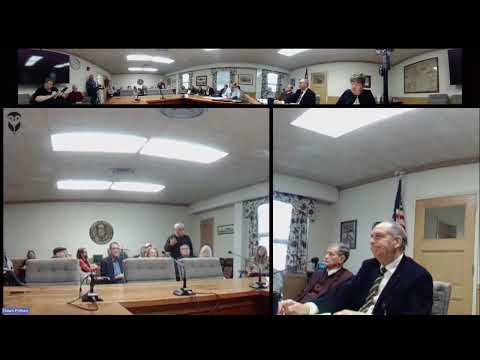
Public commenters urge Lebanon County to discourage 287(g) agreements with ICE; commissioners table resolution for later consideration
Summary
Residents urged the Lebanon County Board of Commissioners to adopt a resolution discouraging county participation in 287(g)-style agreements with ICE; supporters warned of community trust and liability risks while opponents argued for law-enforcement cooperation. Commissioners placed a citizen draft resolution on a future agenda for consideration.
Michael Schroeder, a South Annville Township resident, asked the Lebanon County Board of Commissioners to adopt a citizen-drafted resolution “strongly discouraging county offices, agencies, and officials from assisting ICE in the enforcement of civil immigration law,” citing a 16-page annex he submitted to the board that he said documents alleged abuses by U.S. Immigration and Customs Enforcement.
Schroeder told the commissioners he had spoken with Sheriff Jeff Marley, who he said assured him the sheriff’s office would not change existing procedures, but Schroeder warned that monetary incentives tied to 287(g)-type agreements create structural pressures that could undermine trust between local police and immigrant communities.
Tom Aiello, who identified himself as part of a local “Monday protesters” group, told the board those collaborations “undermine public safety, erode community trust, violate constitutional rights, and have a strong possibility of creating significant liability for Lebanon County,” and urged the commissioners to discourage use of county time, funds and resources for civil immigration enforcement.
Several speakers repeated concerns that honoring ICE civil detainers without a judicial warrant could expose the county to Fourth Amendment liabilities and discourage immigrants from reporting crimes or serving as witnesses. Lou Felic, a retired county employee, cited testimony and news reports alleging troubling ICE conduct and said distancing local law enforcement from ICE could improve community relations “at almost no cost.”
Not all commenters supported the proposed discouraging resolution. Aaron Melvin told the board he supports coordination with ICE, Homeland Security and Border Patrol, saying those agencies protect the public and uphold the law. Gary Gates and others called for transparency and narrowly justified targeting, asking the county to specify who would be targeted and why before formal cooperation occurs.
In response to the public comments, a commissioner made a motion to add the citizen-drafted resolution to the agenda for consideration; the motion carried by voice vote and the board then took a subsequent motion to pass the resolution "under advisement," saying it may be considered at a future meeting. No final adoption vote on the substance of the resolution occurred at this meeting.
What happens next: The board recorded the public concern, placed the citizen-drafted resolution on a future agenda, and did not make a final decision on discouraging agreements with ICE. Several public speakers asked the board for specific local data; commissioners said they would take comments under advisement and directed staff to forward submitted materials to appropriate offices for review.