Get AI Briefings, Transcripts & Alerts on Local & National Government Meetings — Forever.
Senate Health Services Committee adopts amended House Bill 2, delaying and narrowing parts of Medicaid overhaul
Summary
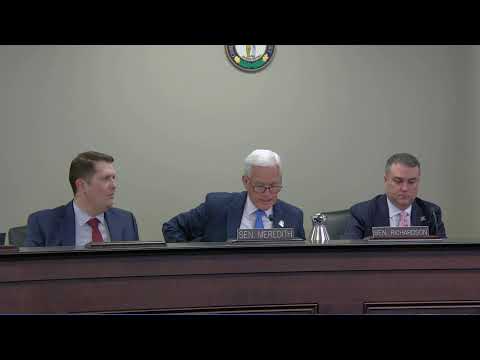
The Senate Health Services Committee adopted a senate committee substitute to House Bill 2 and passed the measure 11–0 after testimony. The substitute delays federal cost-sharing until Oct. 1, 2028, reduces proposed co-pays, narrows audit and eligibility provisions and adds a restriction on administrative changes without legislative authorization.
The Senate Health Services Committee on [date not specified in the transcript] adopted a senate committee substitute to House Bill 2 and passed the bill out of committee by a recorded vote of 11–0 after three public witnesses testified.
The committee substitute delays several changes originally set in the House bill so Kentucky’s implementation aligns with federal HR 1 timelines, reduces proposed co-pay amounts, narrows some audit and eligibility provisions and adds a provision limiting administrative changes to Medicaid without express legislative authorization.
Senator Craig Richardson, presenting the committee substitute, said the substitute "delays that implementation of cost sharing requirements until 10/01/2028" and reduces co-pays from the house levels to "$5 for all health care services and $1 for prescription drugs," a change he described as aligning state law with federal guidance.
Why it matters: The substitute moves implementation dates to the federally required timelines and scales back several of the House bill’s more stringent measures. Supporters framed the changes as balancing program integrity with due process and protecting providers from immediate reimbursement losses. Critics and witnesses warned that added verification steps and redetermination processes could create administrative churn and risk eligible Kentuckians losing coverage.
What the substitute changes (highlights) - Cost sharing: Implementation of new cost-sharing moved from Jan. 1, 2027, to Oct. 1, 2028, and proposed co-pays were reduced to $5 for most services and $1 for prescriptions. Sponsors said the move follows the federal timeline. - Redetermination and eligibility: The committee substitute aligns the Department for Medicaid Services’ redetermination deadlines with federal dates (statutory compliance pushed to Jan. 1, 2027) and revises some eligibility timing language (for example, allowing three months of required community engagement without requiring those months to be consecutive). - MCO audits and provider rules: The substitute deleted a proposed 2% performance-based withhold for managed care organizations and removed several prescriptive audit timelines and demands from the House text; it also redefined an "inactive Medicaid provider" as a provider with fewer than one Medicaid claim in the prior 12 months. - Waiver attestation and coverage rules: The substitute broadens who can attest to an individual’s need for home- and community-based waiver services (adding nurse practitioners and licensed psychologists) and narrows a proposed ban on drug coverage so it disallows coverage only for drugs prescribed primarily for weight loss rather than broadly excluding weight-management therapies. - Administrative authority and auditing: The substitute adds a new section clarifying that the cabinet for Health and Family Services cannot change eligibility, coverage or benefits without authorization from the General Assembly, and deleted a separate requirement for a statutory comprehensive auditor examination that appeared in the House bill.
Public testimony and expert cautions Maggie Chisholm, identifying herself as a Kentucky advocate and mother, gave emotional testimony about her daughter Evie’s repeated waiver renewals and death in November 2024, saying the system had been "disconnected from the people it serves" and urging lawmakers to build policy that protects vulnerable families.
Jason Dunn, a former long-time cabinet official who worked on eligibility programs, praised several changes but cautioned that adding more data matches and redetermination triggers could create "unnecessary denials, delayed access, and application churn" and urged a conservative approach until federal implementing guidance from CMS is clear.
Emily Beauregard, executive director of Kentucky Voices for Health, told the committee the substitute reflected many stakeholder recommendations and supported aligning implementation dates with federal requirements. She urged protections to prevent a single conflicting data source from terminating coverage and recommended that "beneficiaries should always have 30 days to provide additional documentation to resolve any conflicting state or federal data sources before the state makes an eligibility determination that could end in terminating their coverage."
Committee action and next steps After discussion and public testimony, the committee moved and then adopted the amended House Bill 2. The committee recorded a final vote of 11 in favor and 0 opposed and completed housekeeping motions to roll the amendment into PSS 2 and adopt a title amendment. Committee leaders said they expect continued work on Medicaid oversight and monitoring and highlighted the Medicaid Oversight and Advisory Board and a dashboard required by the bill as mechanisms to track implementation.
The committee adjourned after completing business; the bill will proceed according to the legislature’s remaining process.
Quotes (selected) "The committee substitute delays that implementation of cost sharing requirements until 10/01/2028," — Senator Craig Richardson. "On 11/13/2024, Evie took her final breath and passed away in my arms," — Maggie Chisholm, describing the human impact of waiver process problems. "It adds more red tape, exceeds requirements of federal law," — Jason Dunn, on adding verification steps beyond federal requirements.
Ending The Senate Health Services Committee passed House Bill 2 as amended with a unanimous committee vote; committee leaders and stakeholder advocates said they will continue monitoring implementation, data collection and the bill’s effects on access to care.