Get Full Government Meeting Transcripts, Videos, & Alerts Forever!
Get email alerts on the Water Infrastructure topic
No spam. Unsubscribe anytime.
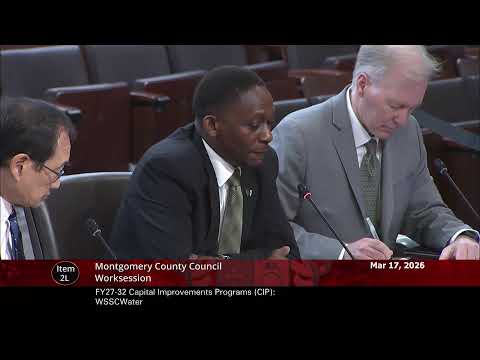
Council hears WSSC update after a winter of system breaks; asks who will cover DC Water interceptor costs
Summary
WSSC officials told the council their FY27 CIP is $4.8 billion and that crews responded to 1,934 breaks between July 1 and March 12 (1,456 in the winter window cited); councilmembers pressed for details about cost recovery related to DC Water's Potomac interceptor failure and for clearer timing of when costs might appear in local budgets.
Members of the Montgomery County Council heard a briefing from WSSC Water staff on the utility’s FY27 capital improvement program and recent system performance, then pressed officials about who will bear costs tied to DC Water’s Potomac interceptor failure.
WSSC reported a $4.8 billion CIP that includes 57 capital projects and a mid‑cycle update staff asked the council to accept. Chief Engineer Alan Long described a challenging season and said the utility has increased FY27 CIP funding for condition assessment and long‑term replacement to reduce break risk. Muneta Temtemseh, WSSC’s chief financial officer, told council members that between July 1 and March 12 the system experienced a total of 1,934 breaks, with 1,456 occurring during the winter season window cited.
Chair Evan Glass and other councilmembers asked for specifics on the Potomac interceptor failure and who will help pay repair costs. WSSC said it is pursuing supplemental federal funding and coordinating with DC Water and partner jurisdictions; officials could not give a firm estimate on Montgomery County’s share and said they would provide follow‑up information once negotiations and federal funding decisions are clearer. WSSC indicated that if costs fall in the current year, the utility would absorb them in its operating budget; otherwise they would be reflected in future operating or capital planning.
Councilmembers emphasized the regional nature of the issue and asked staff to return with numbers on the county’s potential financial exposure and the timing of any costs or reimbursements.
What happens next: WSSC will provide follow‑up information on estimated costs and reimbursement status; the council accepted the mid‑cycle CIP update and will monitor any budgetary implications.