Get Full Government Meeting Transcripts, Videos, & Alerts Forever!
Get email alerts on the Youth Programming topic
No spam. Unsubscribe anytime.
Presenter outlines 12‑week substance‑use prevention curriculum and youth art workshops for CLC after‑school programs
Summary
A presenter described a partnership with the CLC to deliver a 12‑week substance‑use prevention curriculum and new youth art workshops in after‑school programs, saying the art activities give students a healthy coping outlet and that projects may be entered in a youth art showcase.
A presenter described a new partnership with the CLC that links youth empowerment clubs and after‑school art workshops to substance‑use prevention efforts.
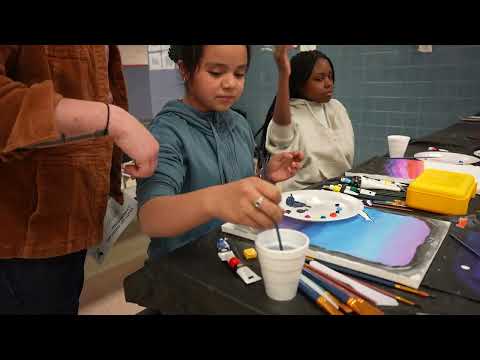
The presenter said the collaboration has two components: youth empowerment clubs that run a 12‑week curriculum focused on substance use and “protecting your brain and body,” and a newly introduced youth art workshop series this semester intended to give students a creative outlet. The presenter said students who choose to may submit workshop projects to a youth art showcase.
The presenter framed the programs as prevention work. “We know through research that in order to prevent substance use, creating and increasing the amount of protective factors that are within a youth’s environment — not only individual and familial, but also on a school and community level,” the presenter said, explaining the programs aim to raise those protective factors.
The presentation emphasized practical supports: regular access to creative activities and instruction in healthy coping skills. “By providing art and to give them this art outlet, we give them a way to be able to be expressive, creative, and ultimately get that outlet for a healthy coping,” the presenter said, describing art as a mechanism to help students manage stress.
The presenter said the programs operate in after‑school settings through partnerships with schools and the CLC; no funding amounts, specific school names, or implementation timelines were provided in the remarks. The presentation did not record formal votes or directives; it appeared informational and focused on program description and rationale.
The session moved next to audience interaction after the presenter invited participants to “just shout out all any emotion that you can name” as an opening exercise.