Get AI Briefings, Transcripts & Alerts on Local & National Government Meetings — Forever.
Orleans Parish school finance team flags revenue risks as audit closes and May state measures loom
Summary
At an April 28 Budget & Finance Committee meeting, district finance staff presented February 2026 financial statements, reported audit close-out adjustments and deferred revenue, and warned that Amendment 3 and House Bill 795 could reduce per‑student funding and change local revenue timing.
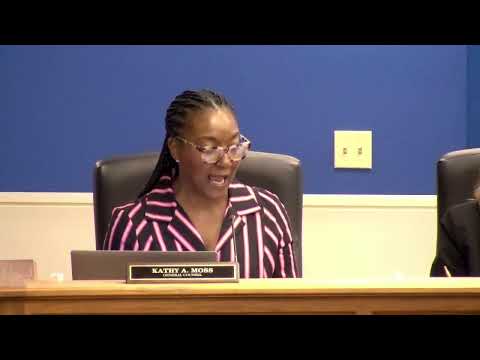
Naisha Veil, the district finance presenter, told the Orleans Parish School Board Budget & Finance Committee on April 28 that February general fund revenues were “a little over 2,400,000” compared with $3.1 million budgeted and that expenditures for the month were about $3.1 million against a $3.7 million plan. She said the district had made audit adjustments and reported an unaudited fund balance in the low hundreds of millions.
Veil said the district had not yet posted an amendment to its DLFA allocation; when that adjustment is applied in April, staff expect a corresponding uptick in recognized revenues. She gave a systemwide local-revenue summary for the prior year and said the district paid roughly $353–354 million through the DLFA to schools while collecting about $366.3 million after capital revenues and carve-outs, leaving roughly $12.1 million identified as deferred revenue.
Why it matters: Veil warned the committee that looming state measures could change the district’s revenue mix. She outlined Amendment 3 — a May 16 ballot measure that would make permanent teacher raises (cited as $22.50 for teachers and $1,125 for support staff in Veil’s slides) funded by state trust funds — and said staff research showed New Orleans could lose about $51.86 per student (roughly $2.3 million in aggregate) in grant funding if those state trust funds are repurposed or eliminated. “So while we are helping our teachers, we’re also preparing on what kind of program it stops,” Veil said.
Veil also flagged House Bill 795, which would cap fees related to sales tax collection. She cautioned the committee that sales-tax recognition timing differs between the city’s cash-basis accounting and the district’s point‑in‑time recognition, and that staff project sales tax receipts of approximately $179 million–$182 million and property tax receipts of roughly $235 million–$244 million for the fiscal year, while year‑to‑date collections stood near $231 million as of the presentation.
On risk management and insurance, Veil described two renewal options brokered with Alliant: Option 1 would maintain current $50 million limits and cost a little over $8.2 million (inclusive of parametric and flood coverage) while reducing per‑student cost by about $29.47 compared with prior proposals; Option 2 would increase limits to $60 million at higher cost. Staff recommended Option 1 to preserve resources for students.
Audit and corrective action: Veil reported that the 2025 audit reduced findings from seven to one. Staff are preparing a budget amendment to incorporate corrective actions and to recognize one‑time RAN proceeds as nonrecurring revenue; the amendment is expected before June 30 and on the May board meeting agenda.
Board follow-ups and questions included a request from Board member Griffin for district work with the assessor to produce a gross citywide tax roll analysis showing amounts paid versus outstanding; Veil said staff would compile and provide that information.
What’s next: Finance staff will finalize student counts that affect per‑pupil calculations, present the budget amendment at the May board meeting, and the committee advanced several related items to the full board for final action.