Get Full Government Meeting Transcripts, Videos, & Alerts Forever!
Get email alerts on the Budget topic
No spam. Unsubscribe anytime.
RSU 5 board signals support for mid‑level budget after public pleas to save teachers
Summary
After an hour of public comment urging the district not to cut ESOL, world-language and math positions, RSU 5 administrators outlined three budget tiers and the board indicated preliminary support for "tier 2a," which restores several small positions while projecting a roughly 7% school‑portion tax impact.
The RSU 5 School Board on March 11 moved closer to approving a mid‑range FY27 budget after residents, teachers and students urged the board to avoid cutting classroom positions.
The superintendent and finance staff reviewed three budget scenarios for the coming year — a baseline with no reductions, the superintendent’s recommended reductions ("tier 2," roughly a 6.5% year‑over‑year increase in the school portion of the tax rate) and a slightly higher option that restores a handful of positions ("tier 2a," about 7%). Finance staff presented community‑level tax impacts, and the board signaled a preliminary consensus for tier 2a as the warrant is prepared for next week’s formal vote.
Why it matters: Parents, teachers and students urged the board to preserve staff positions that supporters said are essential to maintaining program quality and legal obligations. Speakers pointed specifically to ESOL staffing, middle‑school French and a proposed high‑school math position as roles that would harm students if eliminated.
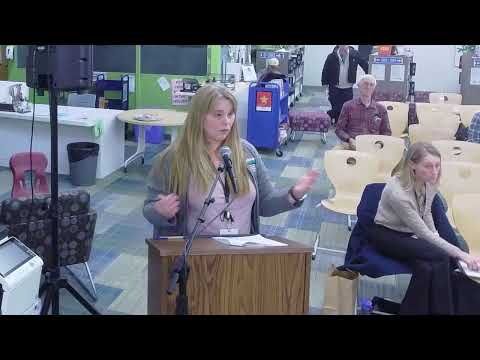
"We need this position. The kids need this position," said Erin Abbott, who identified herself as a Freeport High School teacher, describing intervention labs and the effect of losing a math teacher on students who already struggle. Several other speakers echoed that concern: "Cutting what few elective students have is not in their best interest," said Kathy Richard representing the world language department, while Jill Hyland said cutting ESOL would force two endorsed teachers to cover dozens of multilingual learners across five buildings.
Administrators’ case: Superintendent Tom Gray framed the recommendations as a macro decision shaped by projected enrollment declines, major capital needs and staff‑compensation pressures. "We looked at numbers, we called upon our judgment," Gray said, adding that the team prioritized student‑facing positions in the youngest grades when weighing reductions and add‑backs. Finance staff explained that some line items — notably the first lease payment for an energy‑audit capital project and a phased vehicle/equipment replacement plan — are multi‑year commitments that cannot be reduced in the short term.
Which positions would change under tier 2a: The board asked administrators to show what restoring a modest number of positions would cost. Under the trimmed plan the administration recommended adding back a 0.4 FTE to make the middle‑school Spanish role whole (by shifting a 0.4 ed‑tech allocation), reinstating a K–5 instructional strategist, and adding two general‑education ed‑techs at two elementary schools. Administrators said those moves would increase the proposed Article 1 operating warrant by about $255,979.
Tax impact and process: Finance staff emphasized that the figures quoted are the school portion only and are based on prior mill rates and valuations; they also noted state subsidy assumptions and rounding can produce slight differences across tables. Board members debated whether to discuss budgets by percentage (trusting administrative prioritization) or position‑by‑position (responding to constituent testimony). Several members urged deference to administrators’ analysis while acknowledging the human consequences of reductions. The chair said the board would not take a final vote that night but asked staff to prepare the warrant documents for the tier 2a scenario for next week’s meeting.
Next steps: The board will receive the Article warrants based on the tier 2a path and take a formal vote next week. If the warrant is adopted by the board, it will proceed to the annual budget meeting in May and a referendum in June. The superintendent and finance staff cautioned that if a referendum fails the district reverts to the prior year’s budget until a new budget is approved.
Public comment recap: In addition to teachers and parents, students spoke at the podium: a third‑grader described the value of his small elementary school in Pownall, and a high‑school junior and parent asked the board to preserve middle‑school French to maintain continuity into high‑school language sequences. Multiple residents urged the board to consider local tax‑assistance measures for seniors on fixed incomes and to weigh non‑instructional savings where feasible.
The board also heard questions about state funding: staff noted several pending legislative proposals (including LD 2226 and related amendments) that could change the state subsidy formula and reduce the district’s state funding in future years; members said that uncertainty factored into the administration’s recommendation to preserve some capacity now.
A copy of the board’s budget handouts and the tier comparisons are available via the district’s FY27 budget page. The board moved into executive session to discuss administrator negotiations at the end of the meeting.