Get AI Briefings, Transcripts & Alerts on Local & National Government Meetings — Forever.
Hundreds of callers split over $95M West Susitna access‑road appropriation; opponents cite environmental and fiscal risks
Summary
More than two dozen callers testified for and against a $95 million appropriation in SB 214 to fund the first 22 miles of the West Susitna (West Desitna) access road; opponents pointed to incomplete federal review, ecological and cultural impacts, and large total cost estimates while some local leaders and business owners defended the project as a strategic investment.
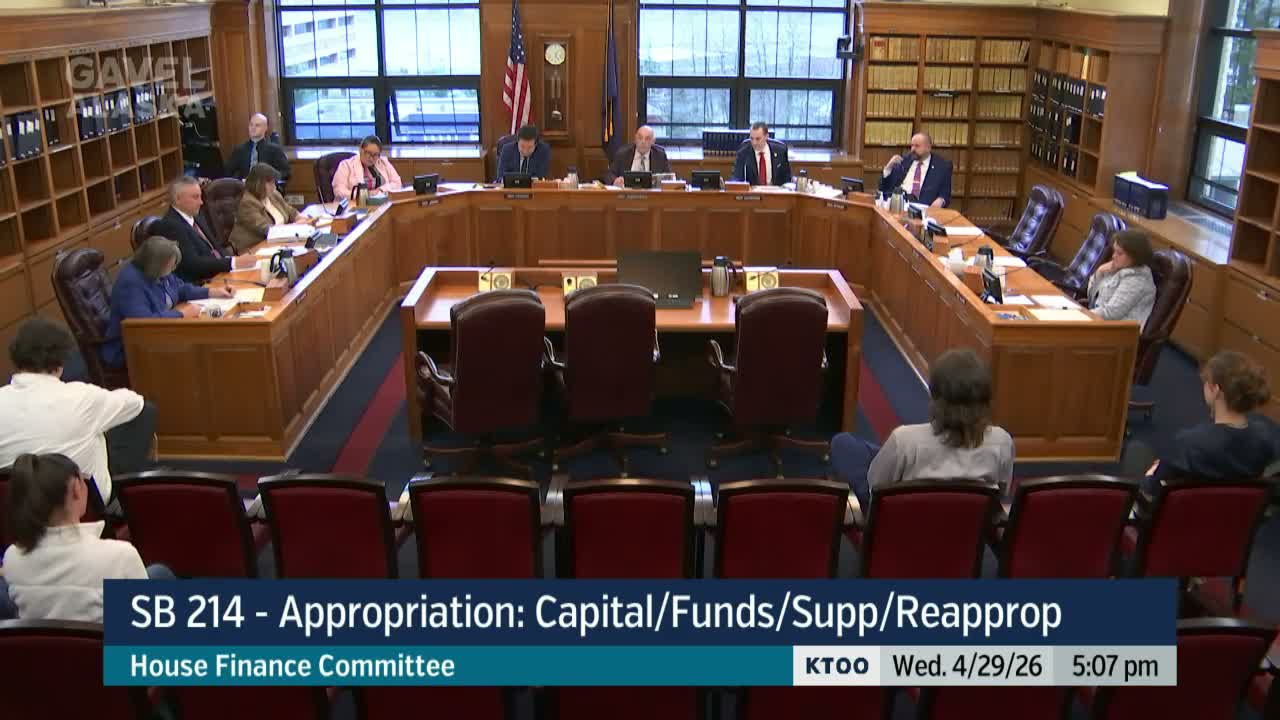
The House Finance Committee received extensive, divided public testimony on the proposed $95,000,000 appropriation in SB 214 for the first 22 miles of the West Susitna (also referred to in testimony as West Desitna) access road.
Opponents — including residents, fishery and recreation industry representatives, tribal leaders and engineers — raised environmental, cultural and fiscal concerns. Karen Garvey said the environmental review was not complete and that the appropriation should not proceed while federal assessments and permits (an environmental assessment, Clean Water Act Section 404 wetlands permitting and Section 106 historic preservation consultation) remained unresolved. Other testifiers cited impacts to streams and wetlands, inadequate fish passage design for many culverts, and the project’s proximity to culturally sensitive sites and burial grounds.
Engineers and analysts testified about cost and technical difficulty. Bob Butera, who worked on the reconnaissance study, warned the project crosses many rivers and will require complex bridges. Lois Epstein, a licensed Alaska engineer, summarized HDR’s 2014 recon study and said, after updating to 2025 dollars, per‑mile capital costs range from $8 million to $12.6 million; extrapolated across 100 miles that equates to roughly $800 million–$1.26 billion. Several speakers urged removing the $95,000,000 line in SB 214 and redirecting funds to deferred maintenance and existing roads.
Supporters said the road unlocks resource development, jobs and long‑term economic value. Terry Gorlick and other Mat‑Su speakers framed the project as strategic infrastructure that could connect mineral resources, timber and recreation economies and leverage federal receipts. Andrew Traxler (local road board chair) and Michael Boles (Mat‑Su Borough Assembly member) urged the legislature to support the appropriation, saying it would bring jobs and support freight access to ports and rail spurs.
Why it matters: The item pairs a sizeable capital appropriation with unresolved federal permitting and widely varying cost estimates. Testimony framed a trade‑off between near‑term environmental and cultural risk and potential long‑term economic development; critics said the appropriation would subsidize primarily private mining interests.
Next steps: The hearing recorded testimony but no committee action on the appropriation. Several legislators asked technical questions and signaled awareness that the project has both strong local proponents and widespread opposition across other affected communities.