Get Full Government Meeting Transcripts, Videos, & Alerts Forever!
Get email alerts on the Building Code topic
No spam. Unsubscribe anytime.
Forest Park council adopts updated building code after debate over sprinkler and CO rules
Summary
After an hour of debate about local sprinkler retrofit and carbon‑monoxide provisions, the Forest Park village council approved the ordinance adopting updated ICC building codes but rejected an amendment to reinstate the village's local sprinkler‑retrofit requirement.
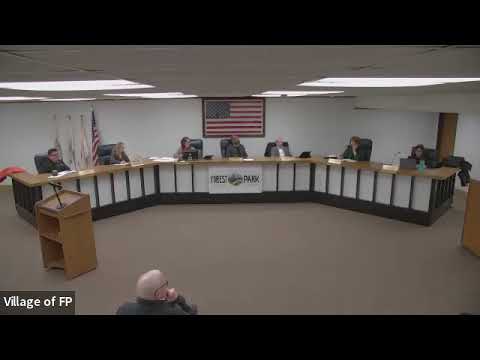
Forest Park — The village council voted Jan. 26 to adopt updated International Code Council building-code provisions (Ordinance 3‑26), approving the changes after a contentious discussion about whether to keep a local sprinkler‑retrofit requirement and a separate carbon‑monoxide detector provision.
The council rejected an amendment that would have reinstated a deleted local sprinkler‑retrofit section. The amendment failed on a roll call that recorded two ayes and three nos; the main ordinance then passed with recorded unanimous ayes. The chair identified the ordinance as 3‑26 after the vote.
Why it mattered: Commissioners said they were trying to balance public‑safety goals with cost and enforceability concerns. One staff member told the council the carbon‑monoxide detector language was unnecessary because Illinois law already requires such protections. “We’re bound by Illinois state law, specifically the Carbon Monoxide Act,” the staff member said, urging alignment with state requirements rather than duplicating language in the local code.
Arguments for and against: Commissioners who favored keeping a local sprinkler requirement said sprinklers can protect neighbors and first responders in denser building situations; Commissioner Vogt said, “I do know that sprinklers save lives,” urging caution before removing the local provision. Other members and staff pushed back on feasibility and cost: staff described the proposed retrofit language as tied to market‑based “means” calculations that are cyclical and difficult to apply, and warned that forcing sprinkler retrofits on single‑family remodels could add tens of thousands of dollars to construction costs.
Several council members framed the question as one of timing and information: one commissioner said the provision was added in 2010 and never enforced, and asked for more research before removing it; another suggested adopting the ICC updates now and returning the sprinkler issue for separate study and possible amendment. The chair allowed an amendment to be proposed and put it to a vote; the amendment failed and the council approved the code as presented.
What the ordinance does: The council voted to adopt the updated code language recommended by staff and consultants and to remove the locally added sections that were identified as duplicative of state law or difficult to enforce. The council left open the option to amend the code in the future if members develop a clear, implementable local sprinkler approach.
What’s next: The council can revisit the sprinkler question if a commissioner brings a motion with specific, enforceable language. The village administrator and staff indicated they will provide additional analyses if requested by the council.
Vote record (as recorded by the deputy clerk): Commissioner Maxim — Aye; Commissioner Nero — Aye; Commissioner Melon Rogovin — Aye; Commissioner Vogt — Aye; Mayor Rory Hoskins — Aye. Ordinance: 3‑26.