Get Full Government Meeting Transcripts, Videos, & Alerts Forever!
Get email alerts on the Fire District Staffing topic
No spam. Unsubscribe anytime.
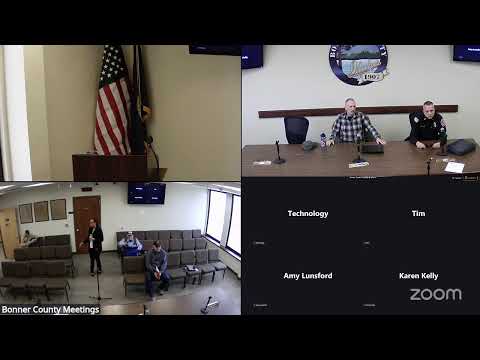
Bonner County fire chief says services are strained; leaders discuss consolidation and levies
Summary
Chief Jeff Armstrong told a commissioner chat that staffing shortages, expiring grants and aging apparatus have left fire districts stretched; officials discussed joint-powers options and upcoming levies to shore up personnel and equipment.
Chief Jeff Armstrong said Bonner County’s fire districts are stretched thin and urged the public to reckon with what that means for response and insurance ratings.
“Public safety in Idaho is failing,” Armstrong told a commissioner chat, adding that the county’s deployment model and budgetary limits have forced hard decisions such as closing the Carywood station after it became unsafe and unsustainable to staff. Armstrong explained that Sagle Fire Station now has three paid firefighters on duty per day, Bottle Bay has one resident firefighter, and several other stations are essentially shuttered.
Why it matters: the county’s insurance and operational ratings hinge on demonstrated staffing levels. Armstrong noted that some ratings require evidence a district can place four firefighters on scene before mutual aid arrives; with single-person engines, crews are limited to exterior work and ordering resources.
Armstrong and others described the staffing picture in detail. Northside runs three firefighters per day in Ponderay, with three positions funded by a SAFER grant that Armstrong said expires in 2027. Westside, by contrast, typically has one firefighter on duty. Armstrong warned that cutting staffing risks losing grant funding and could push districts to single-person shifts.
The chief defended out-of-area wildland deployments as a revenue source that helps local budgets. “We sent an engine to California that cost us $50,000 and we made $200,000,” he said, and added that incident finance typically covers personnel time and backfill when full-time staff deploy.
Districts have pursued cost savings. Armstrong said crews sold poor-condition apparatus, pooled records-software contracts to save about $9,000, and reduced a planned SCBA replacement from an estimated $90,000 to roughly $10,000 by remanufacturing bottles and buying masks — a move he credited to local firefighters and vendors.
On consolidation and joint powers: Armstrong said he has recommended conversations between Northside and Westside and acknowledged consolidation is politically sensitive. Commissioners and attendees discussed a joint powers agreement (JPA) or shared administrative services as ways to combine reserve funds, limit duplicative overhead and prioritize capital purchases. Merlin Glass, representing Westside comment, urged the public to read the consultant Tim Nowak’s needs-assessment to see the options.
Public reaction and finance: Residents pushed for clearer, accessible information about equipment costs and what levies would buy. Amy Lundsberg and others questioned why the city of Ponderay remains in Northside’s service area; Armstrong said city properties are levied under property tax and noted that the city does not make a separate payment to the district.
What’s next: officials said they plan to digest Tim Nowak’s report (available at selkirkfire.us or by emailing Chief Armstrong), pursue public outreach such as a larger town hall, and consider May levies proposed by Northside and Westside to increase staffing.
Armstrong closed with a practical framing: given current resources he sees a near-term deployment of one station north of the bridge and one south of the bridge as a way to preserve core coverage, while longer-term strategies (JPA, levies, shared reserves) would be needed to restore three-person engines and improve outcomes.