Get Full Government Meeting Transcripts, Videos, & Alerts Forever!
Get email alerts on the Public Safety Local topic
No spam. Unsubscribe anytime.
Delegates spar over bill requiring counties to keep leash laws and add penalties
Summary
HB 15-68 would require each county and municipality to adopt or maintain laws prohibiting dogs at large and include civil and criminal penalties; sponsors and park police said the measure improves public safety, while municipal and county groups warned it would force local code re-openings and conflict with home-rule processes.
An extended exchange in the House Judiciary Committee centered on HB 15-68, a bill that would require every county and municipality in Maryland to adopt and retain local ordinances prohibiting dogs "at large," including enforcement provisions and both civil and criminal penalties.
Samuel Inuyomi presented the bill for the sponsor, saying it preserves local authority by not dictating specific ordinance language but would ensure jurisdictions retain an enforceable leash law and an escalation pathway for repeat offenders. "This is just making sure that they continue to commit to that," the presenter said.
Lakeisha Robinson, chief of Montgomery Parks Park Police, said leash laws are core public-safety tools and reported that in early 2026 her agency recorded eight off-leash complaints, issued two citations and encountered an animal bite. "Based on our current practices, we believe this legislation can be implemented using existing resources without creating operational challenges," she said.
Municipal and county representatives, including Charlotte Fleckenstein of Mako and other local-government advocates, urged an unfavorable report, saying the bill would require jurisdictions to reopen codes, conduct public hearings and retrain enforcement staff. Fleckenstein said most counties already define "at large" and have tailored enforcement, and warned the bill's language could conflict with local ordinances or an expansive judicial interpretation.
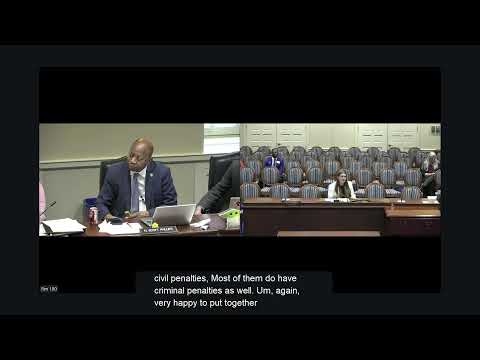
Several delegates recounted local incidents of dog attacks and supported the sponsor’s public-safety rationale; others pressed for clarity about how criminal penalties would be applied. The sponsor and supporters said counties could structure penalties, escalation and enforcement locally, though the bill would require a criminal component to exist in the ordinance. The hearing wrapped up after extended debate and no formal vote on the measure.