Get Full Government Meeting Transcripts, Videos, & Alerts Forever!
Get email alerts on the Public Hearing Sdrk topic
No spam. Unsubscribe anytime.
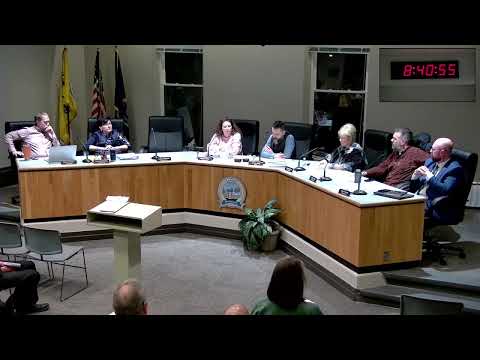
SDRK Group appeals license denials, presents odor-abatement plan; commission delays final vote
Summary
Owners and counsel for SDRK Group LLC told the Lapeer City Commission they have spent more than $200,000 on improvements, described engineering solutions to abate odors and urged negotiation rather than denial; commissioners voted to postpone final action on the appeal until April 6, 2026.
Eddie Shango, co-owner of SDRK Group LLC, told the Lapeer City Commission on March 16 that his licensed grow facility has had no violations in five months and that the business has invested heavily in upgrades to address community complaints. "We spent over $200,000 in improvement in the last year," Shango said, and stressed the facility employs 25–30 local residents.
The company’s lawyer, John Frazier of Dykema, framed the matter as an administrative appeal of the clerk’s denial of certain grow-license renewals and urged commissioners to inspect the facility before acting. "A licensee for an existing license has a renewal expectation," Frazier said, arguing that nonrenewal is the harshest penalty and that lesser remedies or negotiated agreements should be considered.
An engineering consultant introduced by SDRK, identified in the record as Mr. Turchinsky of Geterix, described two technical approaches to eliminate odor leaving the property: a faster retrofit using existing equipment that he estimated could be implemented in about six weeks, and a more comprehensive conditioning-makeup-air overhaul requiring roughly six months. Turchinsky said the retrofit would "balance" air and oxidize volatile organic compounds so odors would be neutralized before discharge. When commissioners and residents pressed on measurement and health concerns, he noted that terpenes trigger human olfactory systems at extremely low concentrations (parts per billion) and explained that laboratory-grade instruments like mass spectrometers, not handheld devices, are required for precise quantification.
Commissioners asked about verification and maintenance. Turchinsky described a litmus-style test applied directly to reactive filter media to indicate when replacement is needed and said replacement filters are inexpensive. Counsel and staff noted that any technical solutions and equipment changes would still require review and approval by the state cannabis regulatory agency before being eligible for a license renewal.
After roughly 30 minutes of presentation and follow-up questions, the commission voted to postpone action on the SDRK appeal until its April 6, 2026 regular meeting to allow additional review, potential site visits and coordination with counsel and staff. The motion to postpone was moved and seconded and carried without recorded opposition.