Get Full Government Meeting Transcripts, Videos, & Alerts Forever!
Get email alerts on the Parental Rights topic
No spam. Unsubscribe anytime.
House adopts parental‑rights committee substitute after lengthy, often heated debate
Summary
The House adopted the committee substitute to House Bill 24‑26, a broad parental‑rights measure that would apply strict‑scrutiny review to government actions affecting parents. Lawmakers debated child‑safety, school transparency, consent for student recordings and medical treatment, and agreed an IEP parental‑consent amendment by voice and roll call.
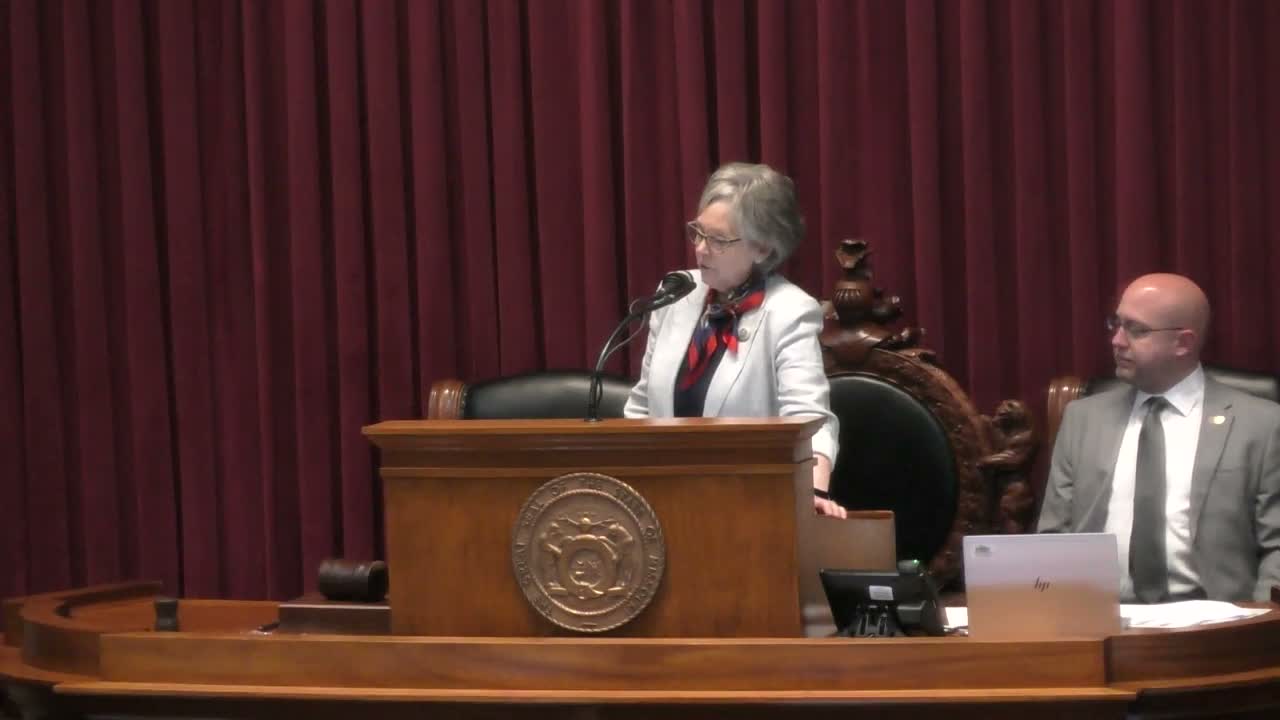
The Missouri House on April 27 adopted the committee substitute for House Bill 24‑26 as amended after several hours of debate over the bill's scope and potential effects on schools, family courts and child welfare proceedings.
The sponsor, the representative from Saint Louis County, described the measure as recognizing parents as "the ultimate and true arbitrators of decision making for their students," arguing the bill codifies a strict‑scrutiny standard judges must apply before government may interfere with parental decisions about education, health care and privacy.
Opponents and questioners pressed the sponsor on many practical points: whether the bill merely restates constitutional protections or raises barriers to existing child‑protection actions; how religious excusal and truancy would be handled; whether school districts could be required to post a searchable online ledger of expenditures; whether parents could veto or would merely be informed about minors' medical treatment (including treatment for sexually transmitted infections), and how the bill treats recordings and consent in schools.
Representative from Saint Louis County offered carve‑outs in the text, including language that nothing in the bill "shall be construed as allowing any person to cause physical injury to another person, and then reading down... fail to provide health care for a child suffering from a life threatening condition." The sponsor repeatedly said the bill is intended to provide parents greater voice while preserving emergency and life‑threatening exceptions.
An amendment (house amendment 0.02h) that focuses on individualized education programs (IEPs) — requiring parental consent procedures for certain large changes such as initial placement, removal of an entire service or a >25% change in service minutes — was offered by the representative from Saint Louis County, debated, and adopted by roll call (98 yeas, 25 nays, 6 present). Supporters described the amendment as a compromise to improve parental involvement in special‑education decisions.
Many members warned that the bill's broad wording could complicate family‑court proceedings and child‑protection investigations, particularly where DNA testing, confidentiality and the timing of interventions are involved. The sponsor said courts retain the ability to act under a "compelling government interest" standard and that the bill seeks to clarify, not eliminate, those protections.
After debate and the amendment process, the House adopted the committee substitute as amended by voice vote; the chair announced the ayes had it.
What changed: The adopted committee substitute elevates parental decision‑making protections, adds transparency provisions for school finances, and incorporates the adopted IEP consent amendment. Members on both sides said refinements may be needed in later sessions.