Get Full Government Meeting Transcripts, Videos, & Alerts Forever!
Get email alerts on the Municipal Budget topic
No spam. Unsubscribe anytime.
Bakersfield officials outline 2026 budget, warn of $23 million in cost pressures and plan cuts to fill gap
Summary
City finance officials told a public workshop the 2026 budget shows an $852 million total with a projected $23 million rise in expenditures driven by wages, pensions and fleet costs; staff propose cutting about $9 million by eliminating roughly 70 vacant positions and trimming discretionary spending to present a balanced budget to council.
Bakersfield finance officials on Thursday laid out a 2026 budget picture that they said requires department and staffing cuts to close a widening gap between revenues and rising costs.
"The total budget on the left, the first column, of $852,000,000, that is the total budget," Finance Director Randy McKegan said as he walked attendees through the presentation. He described roughly $100,000,000 in planned capital improvements and called the general fund the city’s discretionary operational fund.
McKegan told the hybrid public workshop that the city faces roughly $23 million in expenditure increases next fiscal year — driven by wages (about $8.7 million), a $5.3 million increase in pension costs tied to CalPERS actuarials, $2.8 million in higher workers' compensation expenses and nearly $4.6 million in fleet and equipment costs. He said those pressures outpace an estimated roughly $9 million increase in general-fund revenues.
Why it matters: With revenue gains smaller than projected spending increases, staff must identify reductions that can be implemented or approved by the city council so the city can submit a balanced budget. "It is required for the city to submit a balanced budget," McKegan said. "We cannot spend more than we have in revenue."
To close the gap, McKegan said staff are presenting a plan that relies primarily on removing about $9 million tied to vacant positions — approximately 70 vacancies across departments — plus about $1 million in reduced discretionary contributions to outside agencies. He emphasized that these vacancy eliminations and other changes must be approved by council before taking effect.
The presentation also broke down revenue sources. McKegan said roughly three-quarters of general-fund revenue comes from taxes, especially property taxes and two sales-tax sources shown in the slides as Bradley Burns and PSVS; he cautioned the audience that PSVS collections have been adjusted after the state identified some erroneous filings and returned roughly $3,000,000 to the county this fiscal year.
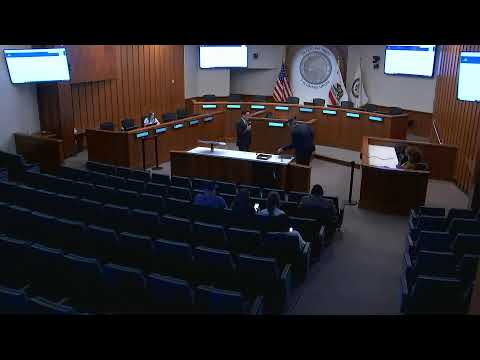
Officials fielded questions about the budget process and said the finance office will present balanced budgets to council in upcoming meetings; council will make final decisions during May and June workshops and hearings. McKegan warned that if proposed sewer-rate increases are not approved, staff would have to reduce sewer capital projects to keep that enterprise fund balanced.
The meeting included an interactive poll showing attendees prioritized public safety, followed by community services and infrastructure. Officials said poll results and an online survey will be compiled and delivered to council.
What’s next: Staff said the recommended budget and the specific department reductions will appear at upcoming council sessions for review and action. The workshop closed with officials encouraging public participation at those meetings.