Get AI Briefings, Transcripts & Alerts on Local & National Government Meetings — Forever.
Committee advances school‑safety measure banning seclusion rooms and a wearable‑panic‑button program "subject to appropriations"
Summary
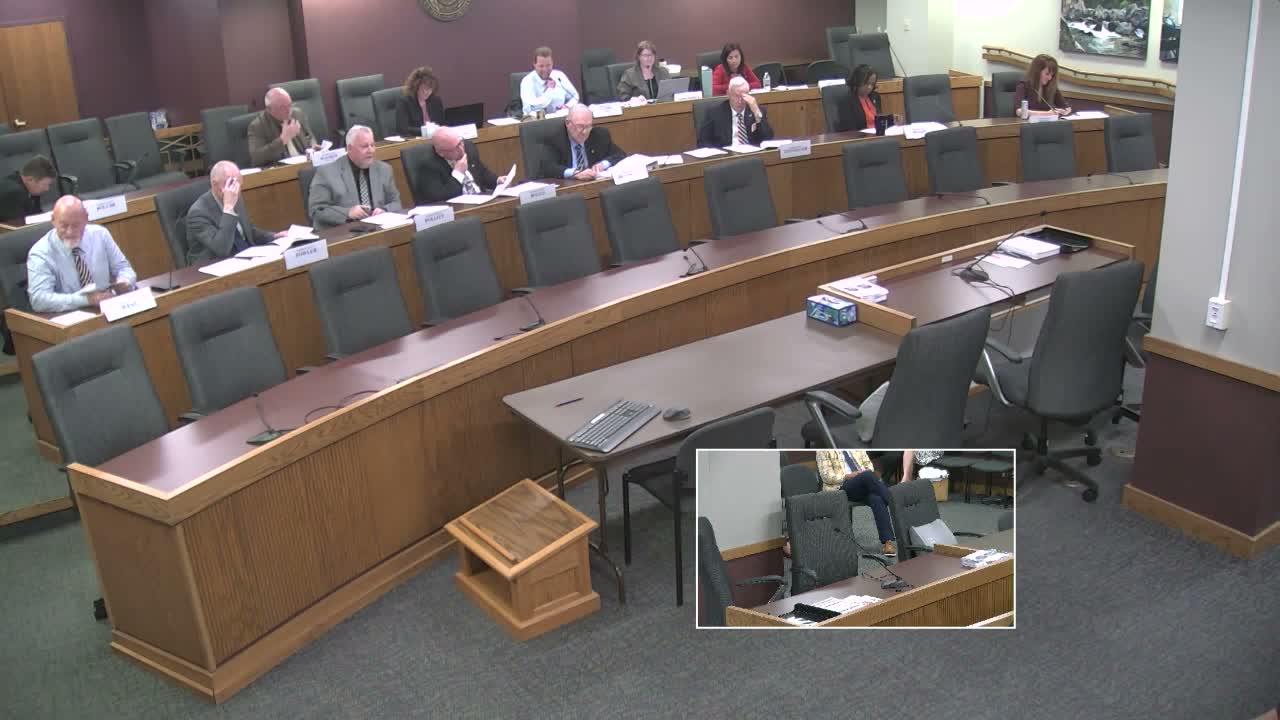
The Rules Committee voted to "do pass" a school‑operations bill that includes a ban on seclusion rooms and approved a related emergency‑response bill that would allow wearable panic buttons, with sponsors and members clarifying the devices would be funded only if appropriations are provided.
The Missouri House Rules Committee advanced two bills related to school safety: a House committee substitute addressing operation of school districts that includes a prohibition on seclusion rooms and restraints in certain special school districts, and a separate bill to create a wearable panic‑button alert system for schools.
Seclusion rooms: Representative Chris, the sponsor listed on the hearing notice, told the committee the seclusion and restraint language responds to a Department of Justice probe in a special school district in St. Louis County and is aimed at banning solitary‑confinement–style rooms that had been abused in that district. He clarified the bill would not prevent ordinary "time‑out" practices in which a student is moved to a separate classroom for disciplinary reasons. "These are very specific rooms like solitary confinement that are used," the sponsor said, describing the DOJ finding as the rationale for the change. The committee voted 10–1 to "do pass" the House committee substitute for the school‑operation bill.
Wearable panic buttons and funding: On a separate bill concerning emergency responses in schools, Representative Doyle Justice (sitting as the sponsor) described a wearable badge system that can signal staff or 911 depending on how it is configured. When asked who would pay for the devices, the sponsor said deployment is "subject to appropriations," and members emphasized that any statewide program requiring funding would need appropriation authority. The sponsor also said districts could solicit private donations to support deployment. The committee recorded a "do pass" recommendation for the emergency‑response substitute; members stressed funding and appropriations would determine whether districts bear costs.
Next steps: Both measures were recommended by the Rules Committee for further consideration; the emergency‑response bill’s funding remains contingent on the appropriation process.
Provenance: seclusion discussion and vote appear at SEG 1029–1114; wearable‑panic‑button Q&A and vote appear at SEG 1238–1410.