Get Full Government Meeting Transcripts, Videos, & Alerts Forever!
Get email alerts on the Annual Audit topic
No spam. Unsubscribe anytime.
Auditors cite repeat material weakness over developer-donated assets in White House audit; financial opinion otherwise clean
Summary
Baker Tilly audited the City of White House fiscal year ending 06/30/2025 and issued unmodified opinions but flagged a repeat material weakness tied to insufficient support for developer-contributed capital assets; auditors recommended stronger documentation (invoices, measurements or valuations) when the city accepts donated infrastructure.
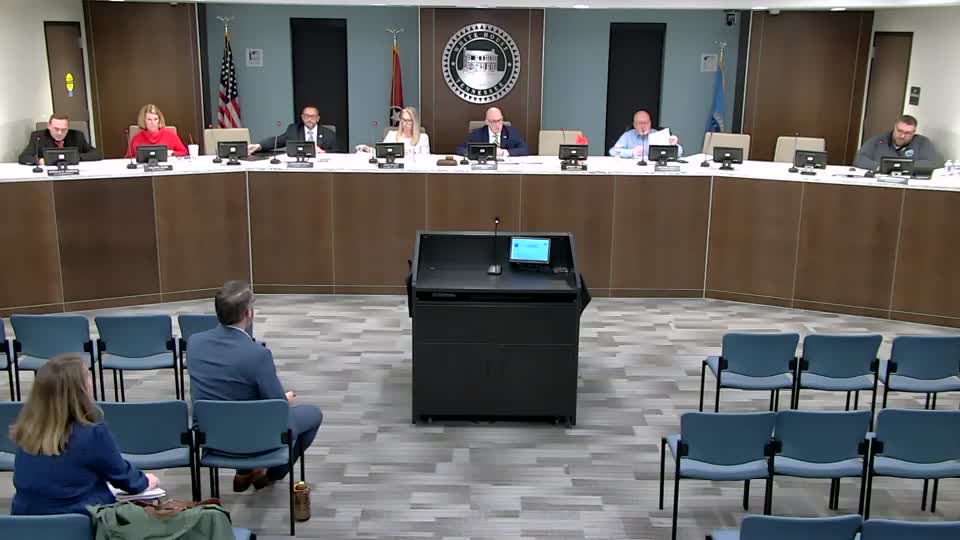
At a White House study session, auditors from Baker Tilly told elected officials the city’s draft fiscal 2025 financial statements would receive an unmodified (clean) opinion but include a repeat material weakness in internal control related to developer-contributed assets.
“My name is Jared King. I’m the audit partner on the audit,” Jared King said as he opened the auditors’ presentation, and he later told the board the firm found routine audit adjustments but no uncorrected misstatements and no disagreements with management. Audit staff member Jessica Beshear summarized the financial results, saying the city’s governmental unrestricted net position rose by about $5,300,000 and business-type net position rose by about $4,600,000 this year, while governmental capital assets increased roughly $22,000,000 and governmental debt increased about $16,000,000.
The nut of the auditors’ finding was contributed property: infrastructure installed by developers (roads, street lights, lift stations and similar items) that the city accepts and records as assets. “We will have a material weakness this year in internal control,” King said, and Beshear explained the issue: the city frequently lacks complete third‑party support for the values recorded when those assets are accepted, so the auditors cannot fully substantiate the amounts recognized.
Why it matters: when donated infrastructure is recorded without robust supporting documentation, the financial statements can overstate or misstate capital assets and related revenues. That can trigger audit findings and complicate future financial reporting and oversight, the auditors said.
The presentation and follow-up exchange focused on how the city currently documents contributed assets and what it should require going forward. Jason Barnes, the city’s finance director, told the board the city had been relying on department schedules and developers’ numbers and that staff has begun pulling vendor information into the general ledger where possible. Council members and auditors discussed options ranging from requiring developer-provided invoices and vendor spreadsheets to performing periodic evaluations or appraisals for certain asset types.
Auditors urged a pragmatic approach. Beshear said some items (for example, simple piping) can be measured and valued by unit costs, while other items could be expensive to appraise individually. “A little bit of background behind it would help us get a lot farther,” King said, recommending the city define what supporting documentation is sufficient for each asset type and include that documentation in the approval packet when the board accepts infrastructure.
Several members asked whether the finding would jeopardize the city’s certificate from the Government Finance Officers Association. King said the city should remain eligible for the certificate despite the finding and described this year’s finding as similar but not identical to last year’s issue.
Practical next steps discussed at the meeting included: requiring developers to provide invoices or other supporting documentation in the packet used when the planning commission and the board recommend and accept infrastructure; creating checklists or per-unit measurement guidance for common asset types; and recording vendor evidence in board packets to create an auditable trail.
The auditors said they will finalize a post-audit letter and a management corrective action plan that will include their recommendation; that plan is included at the end of the draft financials. Jason Barnes and staff indicated they will work to collect supporting documentation and to add clearer requirements to future acceptance packets. The auditors closed the presentation and the board continued to the remainder of the meeting.