Get Full Government Meeting Transcripts, Videos, & Alerts Forever!
Get email alerts on the Municipal Finance topic
No spam. Unsubscribe anytime.
White House board approves tax-rate increase and advances code updates
Summary
The White House Board of Mayor and Aldermen approved an ordinance setting a tax rate above the state-certified rate for 2025 and advanced several municipal code updates, including changes to building-code references to align with updated state standards.
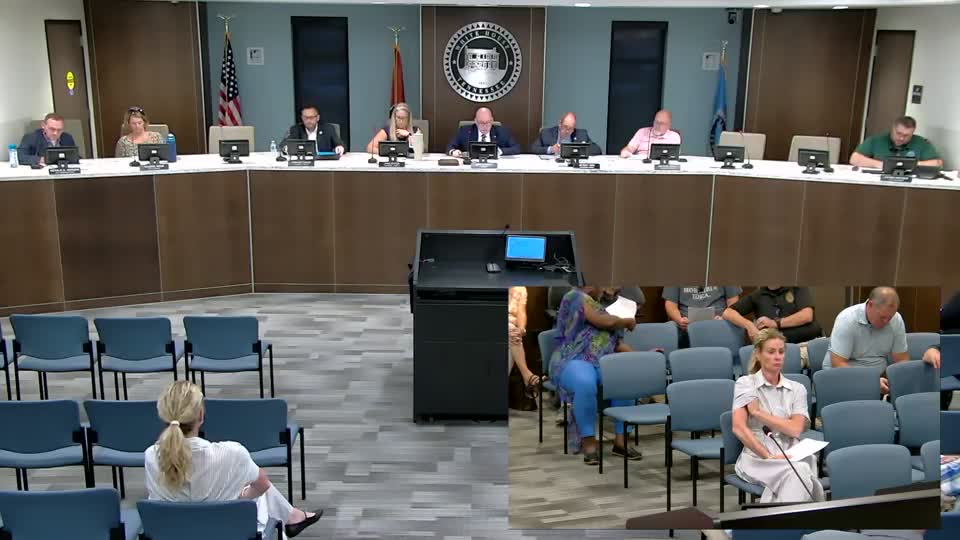
The White House Board of Mayor and Aldermen approved Ordinance 25-08 in a second reading to establish a property-tax rate that exceeds the current certified rate as calculated by the State Board of Equalization for tax year 2025.
The vote took place on second reading during the meeting; presiding officials recorded unanimous 'Aye' votes during roll call. Council members also approved a second-reading ordinance amending Title 1, Chapter 6 of the municipal code related to the city administrator and advanced a first reading to update building and utility codes (moving local references from the 2018 to the 2021 state code) so the city’s regulations track recent state updates.
Planning and codes director Seegis Clark told the board the building-code update is intended to keep local enforcement current with state practice; Clark noted one required addendum would retain a local exemption for sprinklers in certain single-family residences that meet a distance requirement from hydrants. Clark said site-plan and TDOT-permit requirements will be addressed when applicants return with details.
The tax-rate ordinance was presented after a public hearing that drew no speakers. Mayor (presiding) closed the hearing and the board carried the ordinance on the recorded roll call.
Next steps: the code amendments will return for subsequent readings as staff prepares required addenda and specific site-plan reviews where relevant.