Get AI Briefings, Transcripts & Alerts on Local & National Government Meetings — Forever.
Regional inventory finds 91 transportation‑technology projects; committee urges submissions for MBTA funding window
Summary
The Transportation Technology Committee reviewed a regional inventory of 91 technology projects totaling about $161 million in preliminary costs and urged jurisdictions to submit projects for a narrow MBTA Transaction window that determines eligibility for MBTA 70% regional funds.
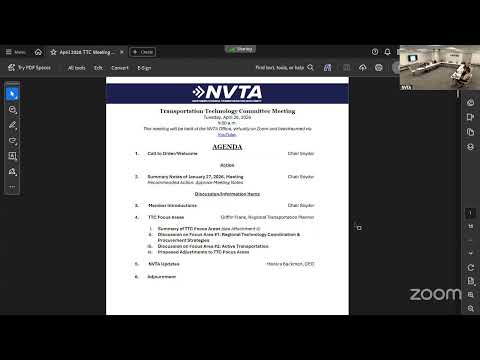
The Transportation Technology Committee of the Northern Virginia Transportation Authority reviewed a regional technology inventory April 28 that lists 91 projects across the region and a preliminary total of about $161 million in project costs, staff said.
Griffin Frank, who presented the inventory, said the outreach (February–March) asked jurisdictions for roughly 20 data fields and received submissions from eight entities (seven jurisdictions and one agency) plus a baseline of 26 MBTA projects. "In total, there were 91 projects," Frank said, adding that projects ranged from pilot efforts of roughly $100,000 to larger regional systems approaching $12 million. He described the $161 million figure as preliminary and subject to updates as more jurisdictions respond.
The presenter said smart signals and corridor management dominated submissions: roughly 40 projects map to signal-related categories. Funding sources were spread across 11 categories; most projects (86) relied on a single funding source, and MBTA and state funds account for a large share of reported investments. Several submissions left funding unspecified.
Keith Jasper emphasized the practical consequence for jurisdictions: to be eligible for MBTA's 70% regional revenues, projects must be listed in the Transaction (the long‑range plan). "This is a very narrow window that will close, and it will not reopen for five years," Jasper said, urging jurisdictions to act quickly. Committee members asked staff to send a clear email with the format and a submission deadline; staff agreed to follow up with details and a timeline for inclusion.
Committee members discussed adding private‑sector deployments to the inventory but noted tracking commercial pilots (for example, deployments by AV vendors) will require a separate effort. Members also raised procurement and lessons‑learned as regional priorities, suggesting the database could be expanded to capture contract types and post‑project evaluations.
The committee approved the meeting summary from Jan. 27 earlier in the session and instructed staff to circulate the inventory map, scoping materials, and a submission checklist by email. Staff said they will compile feedback and present a distilled set of recommendations at the July meeting on July 28.