Get Full Government Meeting Transcripts, Videos, & Alerts Forever!
Get email alerts on the Equity Hmong Project topic
No spam. Unsubscribe anytime.
St. Paul school board adopts Hmong Project resolution to expand Hmong-focused supports and curriculum
Summary
After a lengthy presentation and questions about implementation, the St. Paul Public School District board unanimously adopted a Hmong Project resolution directing the district to increase Hmong-focused professional learning, staff supports, data disaggregation, biliteracy pathways and family engagement with a monitoring framework due by June 23, 2026.
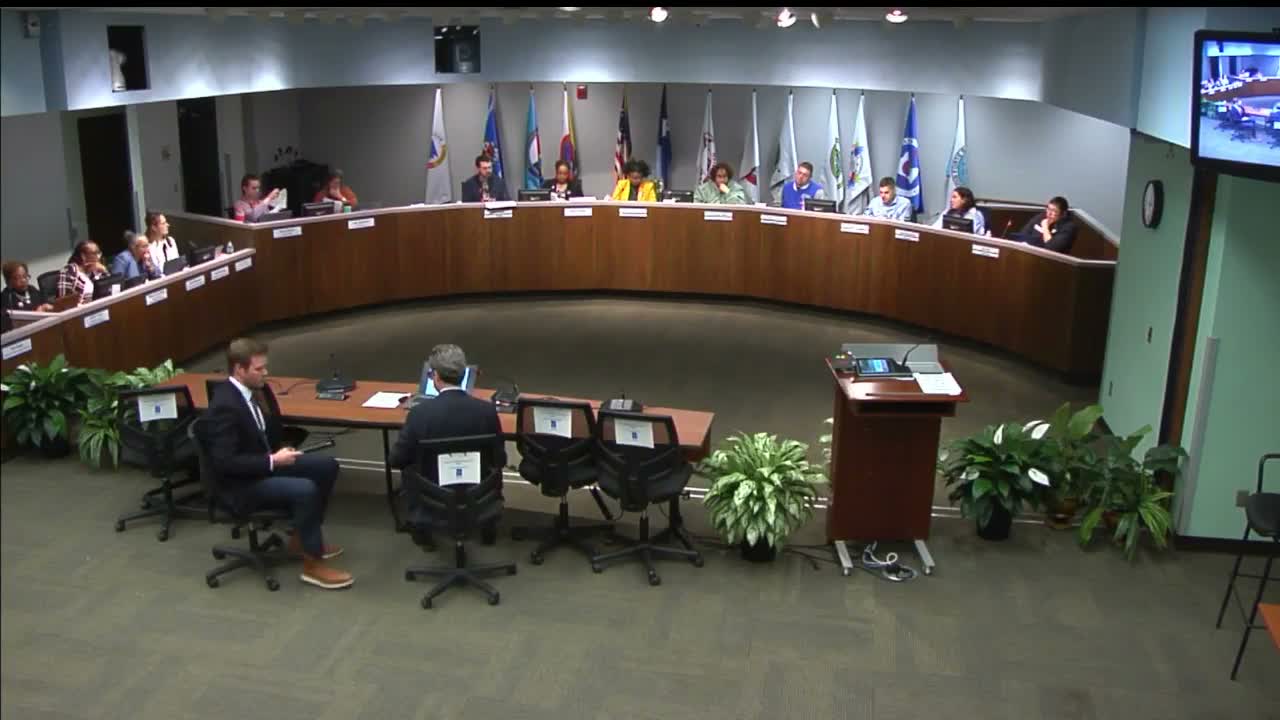
The St. Paul Public School District board on Feb. 17 adopted a resolution directing administration to implement the Hmong Project, a set of goals developed by Hmong parents, students and district staff to boost cultural inclusion and academic outcomes for Hmong students.
The resolution asks the district to ‘‘recognize and value’’ Hmong cultural and linguistic expertise, to create district-supported Hmong affinity and peer-support spaces for staff, to disaggregate and monitor Hmong student data, to expand biliteracy pathways and to improve culturally relevant family engagement. The work group proposed that 25% of licensed staff complete Hmong-focused professional learning in the first implementation year, with a 10% incremental increase annually thereafter; the board amended language on the professional-development phrasing and approved the resolution.
Sophie Lee, a staff member who helped lead the Hmong Project work group, told the board the goals are grounded in survey and focus-group feedback from families, students and staff. ‘‘Students reported 74% had never received instruction on Hmong history,’’ Lee said, and parents asked for clearer pathways to biliteracy credentials that carry postsecondary value.
Parent members and work group presenters described a package of measurable actions: attendance logs for PD, staff-climate and engagement surveys, monitoring of wait lists and enrollment for Hmong programming, and an annual superintendent report on demand and implementation. The resolution also calls for the board to establish a monitoring framework and a collaborative review body by June 23, 2026.
Board members pressed for implementation detail during a lengthy discussion that covered budget implications, alignment with districtwide professional development and the district’s strategic plan. Director Carrillo asked whether the district currently offers ‘‘job-embedded’’ professional development; administrators said most schools do not have that structure and recommended reframing the language to indicate training during duty hours or through district-led PD. Superintendent Stanley said staff would work with teaching-and-learning and equity teams to design training that can be integrated into existing professional learning over time.
Several board members suggested phasing: delay or pilot certain numeric targets if necessary and report back with concrete implementation plans. Parent members and work group co-chairs urged urgency, saying families and students would lose momentum with long delays.
The motion to adopt the resolution passed unanimously after two small amendments: removal of the phrase ‘‘job embedded’’ in the staff-support goal and changing a reference from parents’ ‘‘need’’ to an ‘‘opportunity’’ to learn about biliteracy pathways. The board will receive progress reports under the resolution’s timeline and the superintendent will be responsible for annual reporting and monitoring.