Get Full Government Meeting Transcripts, Videos, & Alerts Forever!
Get email alerts on the Immigration Enforcement topic
No spam. Unsubscribe anytime.
Residents urge Winnebago County to end 287(g)-style cooperation with ICE; sheriff's office presents local data
Summary
Dozens of residents told the Judicial & Public Safety committee the county should withdraw from its warrant-service agreement with ICE, citing constitutional and trust concerns. The sheriff's office said the county uses a limited warrant-service-officer model, reported recent detainer counts and said participation produced no direct financial incentive.
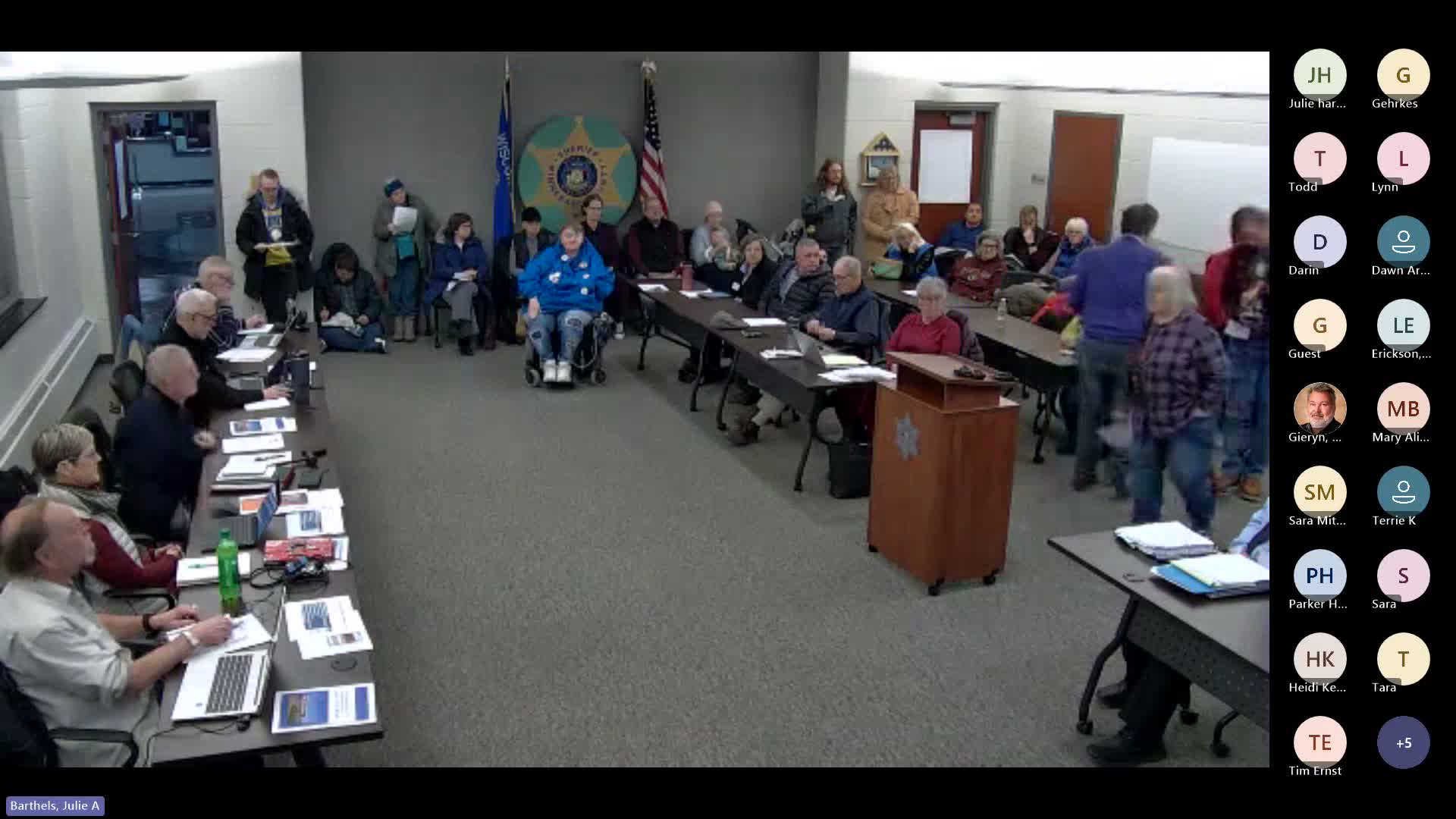
Dozens of Winnebago County residents urged the Judicial & Public Safety committee to push the sheriff to withdraw from the county's 287(g)-style warrant-service agreement with U.S. Immigration and Customs Enforcement, saying the partnership erodes trust and raises constitutional and liability risks.
"Crime committed by U.S. citizens is far more common than crime committed by immigrants," said Becky Stuvis, a resident who addressed the committee during the public-comment period, arguing the program diverts local resources and lacks transparency. "Decision decisions that affect civil liberties and county liability should not be made without transparency."
Multiple speakers cited recent national reports and incidents in other jurisdictions as reasons to end the agreement. "We should terminate our MOA agreement and that we should be out," said Andy Tillman, another resident, urging local officials to keep immigration enforcement at the federal level.
The sheriff's office responded with a presentation describing Winnebago County's participation as a warrant-service-officer (WSO) model rather than the jail-enforcement or task-force models used elsewhere. A sheriff's office representative said the WSO model trains deputies to process detainers for people already booked on criminal charges in the county jail and emphasized the county does not conduct random stops or searches to identify immigration status.
According to the sheriff's office presentation, last year the jail recorded 4,893 total bookings; 228 arrestees were born outside the United States, of whom the office identified 151 as not here legally. ICE placed 17 detainers during 2025. The office said it turned over 10 people to ICE, transferred four to other agencies and had three people still in custody on criminal charges who also had ICE detainers.
For January 2026 the sheriff's office gave a snapshot of 407 bookings, 25 persons born outside the U.S., 13 notifications to ICE and three detainers placed; as of the presentation six people were in the jail on ICE detainers. The presenter said the county receives no direct funding for participation in the 287(g)-style arrangement and that the most comparable federal reimbursement program (reported in the meeting as the State Criminal Alien Assistance Program, abbreviated in remarks as SCAP) produced roughly a $20,000 five-year average in reimbursements that county officials use for inmate services.
Committee members asked clarifying questions about which arrests generate a notification to ICE, how detainers are handled and whether federal holds create additional cost or obligations for the county. The sheriff's office representative said only individuals booked for qualifying criminal charges are eligible for notification and reiterated that the detainer occurs after the criminal processing, not in lieu of it.
The public-commenters' demands and the sheriff's presentation set the issue for further committee attention. The chair said community questions might be answered later in the meeting or in upcoming JPS agenda items; no formal county-board action to terminate the agreement was taken at this meeting.
Next steps: committee members indicated the matter could be revisited in JPS; residents asked that meeting minutes and supporting documents be shared publicly so the community can review the data and any proposed policy changes.