Get Full Government Meeting Transcripts, Videos, & Alerts Forever!
Get email alerts on the Ems And Dispatch topic
No spam. Unsubscribe anytime.
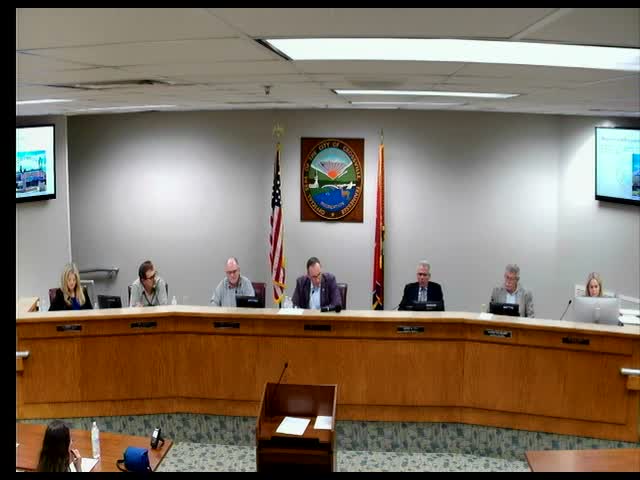
Crossville council hears state and county briefing on EMS, dispatch times and implications of a city ambulance service
Summary
County and state EMS officials told the council that countywide EMS response averages about 10–10.5 minutes while city fire vehicle response averages about 4 minutes 25 seconds; state rules and TCA 7‑61‑102 mean the city would need to negotiate memoranda of understanding with the county if it seeks to operate a primary ambulance service.
County and state emergency medical services officials briefed the Crossville City Council on 9‑1‑1 dispatch performance, ambulance staffing and the legal and operational steps the city would face should it pursue a city‑run ambulance service.
Eric Richmond, executive director of Cumberland County 9‑1‑1, said countywide EMS response times averaged roughly 10.2 minutes in 2023, 10.4 minutes in 2024 and 10.5 minutes year‑to‑date. He told the council that dispatch call‑taking and dispatching are sometimes separate functions and described the combined dispatch model as the “gold standard.” City fire department data presented from ESO software showed an average city fire vehicle response time of about 4 minutes 25 seconds.
Chris Miller, Cumberland County EMS director, described vehicle and staffing distribution across the county (approximately eight to ten trucks during the day with a mix of ALS and BLS units) and explained how crews pull additional units from substations during high demand. Miller said advanced EMTs are performing many tasks once reserved for paramedics because of a statewide shortage of paramedics, and he cautioned that there can be periods when only BLS crews are available.
Brian Tompkins, an Office of EMS consultant for the Upper Cumberland region, reviewed licensing options and state rules and cautioned that TCA 7‑61‑102 and state EMS regulations mean the city must negotiate how transport and nonemergency transfers would be handled with Cumberland County before pursuing a primary emergency provider license. Tompkins said a complete inspection/application sequence typically involves initial review and a roughly 90‑day certification period followed by a 90‑day audit.
Tompkins told council members that a primary emergency provider designation can change which entity has medical direction and that existing memoranda of understanding (MOUs) dictate transport responsibilities; he recommended the city review and, if necessary, renegotiate any MOU with the county before moving forward. Council members asked staff to gather more detailed breakdowns of response times for specific call types and to return with follow‑up information and possible retreat discussion.
No formal action was taken at the work session; council members agreed to request additional details from staff and to have EMS officials return for further discussion.