Get Full Government Meeting Transcripts, Videos, & Alerts Forever!
Get email alerts on the Leachate Pretreatment topic
No spam. Unsubscribe anytime.
Winnebago County seeks consultant for leachate pretreatment study after DNR requests expanded monitoring
Summary
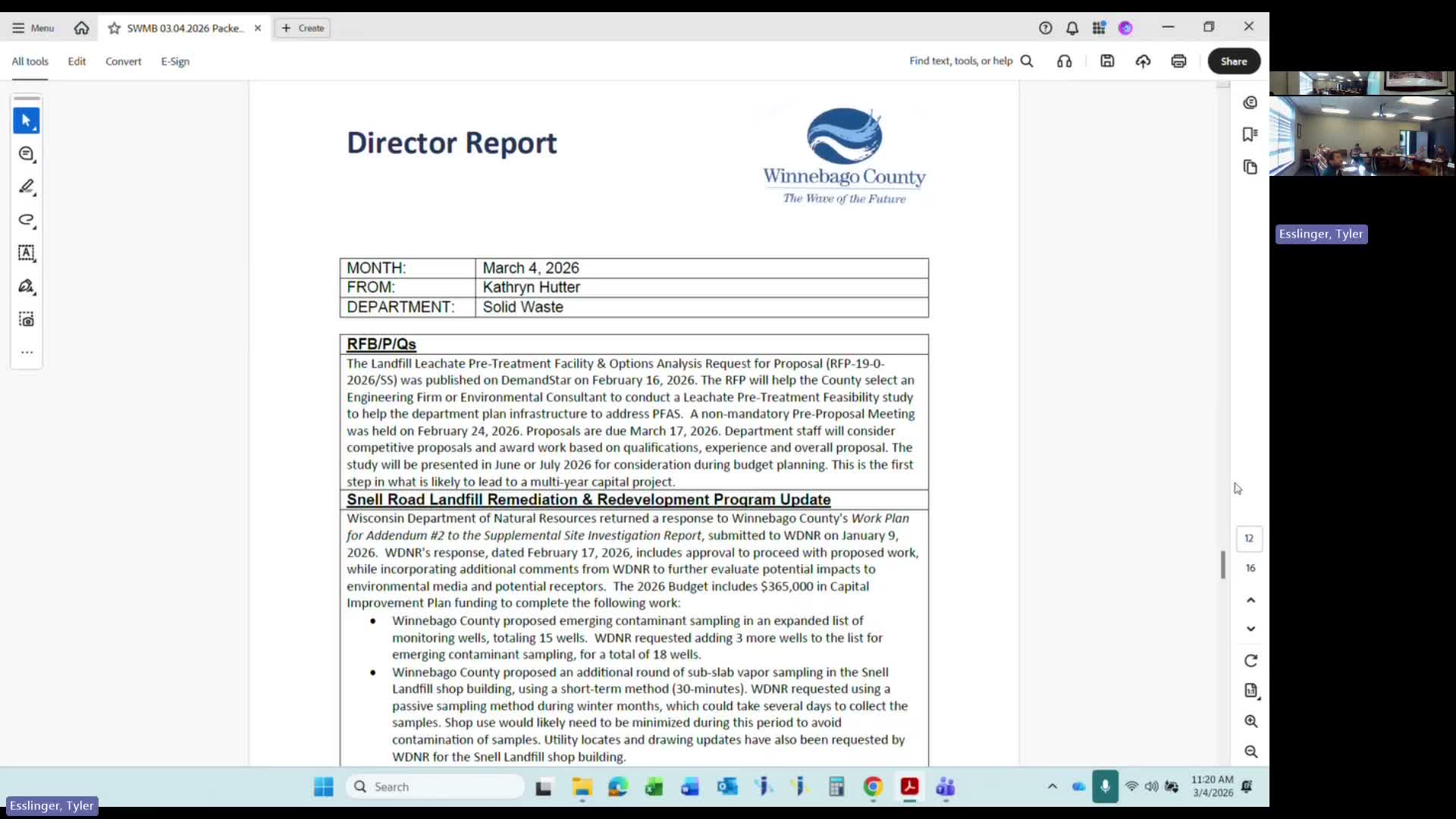
The county issued an RFP for a Leachate Pretreatment Feasibility Study (proposals due March 17) and told the board DNR asked for expanded monitoring and passive winter sampling, increasing the planned 15 monitoring wells to 18 and potentially raising consultant costs.
Winnebago County staff told the Solid Waste Board they issued a request for proposals to select an engineering or environmental consultant to conduct a Leachate Pretreatment Feasibility Study and options analysis, with proposals due March 17. County staff said the work was budgeted in this year’s capital plan.
The county received a DNR response on Feb. 17 asking staff to further evaluate environmental receptors and to expand the monitoring-well plan. The board was told the initial capital-improvement planning included $365,000 for phase-one work and proposed installation of 15 expanded monitoring wells; DNR requested three additional wells, bringing the total to 18 if accepted. Staff said they will prioritize county-owned right-of-way locations and contact private landowners only if necessary.
DNR also requested using passive sampling methods during winter months instead of a short 30-minute sampling approach. County staff cautioned that passive sampling can take several days to collect and may increase exposure of personnel in shop areas and the cost of engineering and consultant work. The county faces a tradeoff, staff said, between broader initial testing scope and avoiding repeated sampling requests from DNR that could delay remediation and drive up total consulting costs.
The board heard that the planned contaminant panel includes chlorinated volatile organic compounds (noted in the record as TCE and DCE) and PFAS as an emerging contaminant. Staff said they could add other analytes later if DNR requests them, but each expansion increases cost and timeline.
Staff also reported other items in the director’s report: a DNR fish study at Conroe Conservation Park Pond and county presentations at a statewide integrated resource-management conference. Staff announced Tri County and educator Kelly received an Associated Recyclers of Wisconsin (ARO) award for education, and described a county sponsorship program that pays roughly $2,000 per participant for a commercial-driver’s-license training tied to a two-year commitment. Finally, staff said DNR approved an alternative financial test on Feb. 25 and the county has requested release of funds from US Bank; staff estimate recovering about $9,000,000 to restore county finances pending processing.