Get Full Government Meeting Transcripts, Videos, & Alerts Forever!
Get email alerts on the Hangar Rates topic
No spam. Unsubscribe anytime.
Public criticizes market study as Winnebago County aviation panel advances Chapter 21 update
Summary
A public commenter and several pilots pushed back on using a market study as the basis for proposed hangar and fuel-rate changes in Chapter 21. County staff said the hangar adjustments represent a small part of the airport budget gap and the ordinance update will go to the full county board March 17.
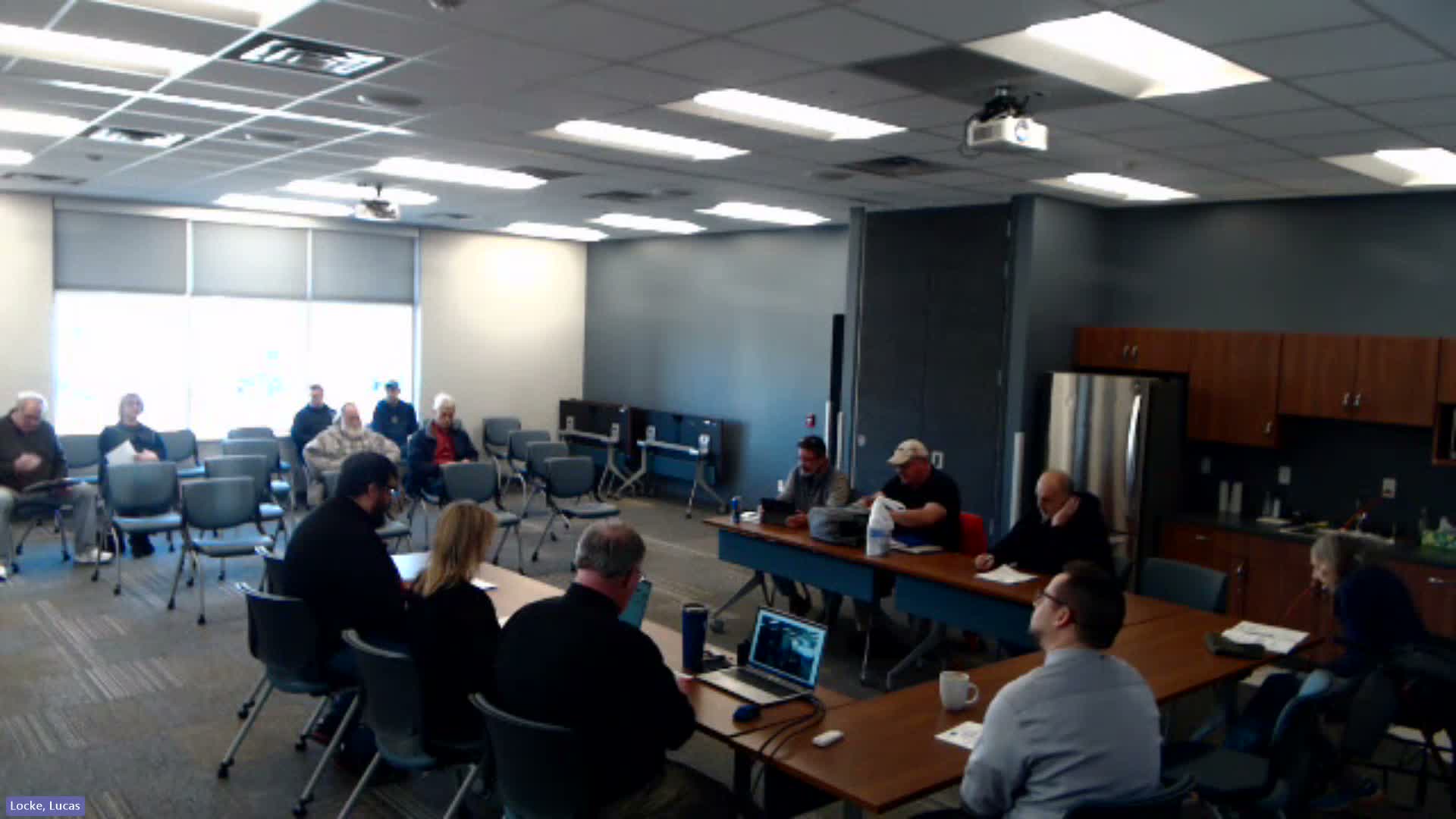
A public commenter told the Winnebago County Aviation Committee on March 4 that the proposed Chapter 21 ordinance still “relies heavily on the market study” despite concerns raised about that study’s accuracy and use.
The comment came during the committee’s public-comment period, where the speaker argued hangar tenants have reservations about the study and about being asked to shoulder increased costs. The speaker also questioned comparisons to a Wisconsin rates-and-charges study and said pilots and tenants sometimes travel elsewhere for cheaper fuel.
The committee’s director, reporting the director’s report on the Chapter 21 update, said hangar rents are only one part of the airport’s revenue picture: the committee record shows roughly $700,000 in annual land-lease revenue in addition to “a little over $4,400,000” in hangar rental fees in a given year and about $80,000–$85,000 annually from fuel-flowage. He told the committee the facilities committee approved the Chapter 21 ordinance update 4–1 and that the full county board will consider the ordinance on March 17 with attachments from prior committee meetings.
A committee member framed the policy question differently, saying the central issue is whether the county is charging a fair market price for hangar space and not simply filling a budget gap. “If we’re charging a fair price, that’s where our goal is,” the member said.
The director responded that staff view the proposed rent increases as fair and equitable adjustments that would close only about 7% of the budget gap, not the entire shortfall, and that revenue changes are being pursued alongside expense reductions and other funding sources.
Public commenters and several committee members also raised alternative revenue ideas, including exploring a small special-event ticket fee to help offset impacts from the EAA air show. Committee members said broader county conversations would be required for implementation of an event fee.
The ordinance update and accompanying materials will be forwarded to the full county board, which is scheduled to take up the measure March 17.