Get Full Government Meeting Transcripts, Videos, & Alerts Forever!
Get email alerts on the Ethics And Governance topic
No spam. Unsubscribe anytime.
Trempealeau County’s corporation counsel outlines limits of county authority, open-meetings rules and ethics code
Summary
At the April 21 orientation, corporation counsel Susan reviewed county powers under Chapter 59, the county code of conduct and ethics, open meetings and closed-session procedures, and Robert's Rules of Order to guide supervisors in their duties.
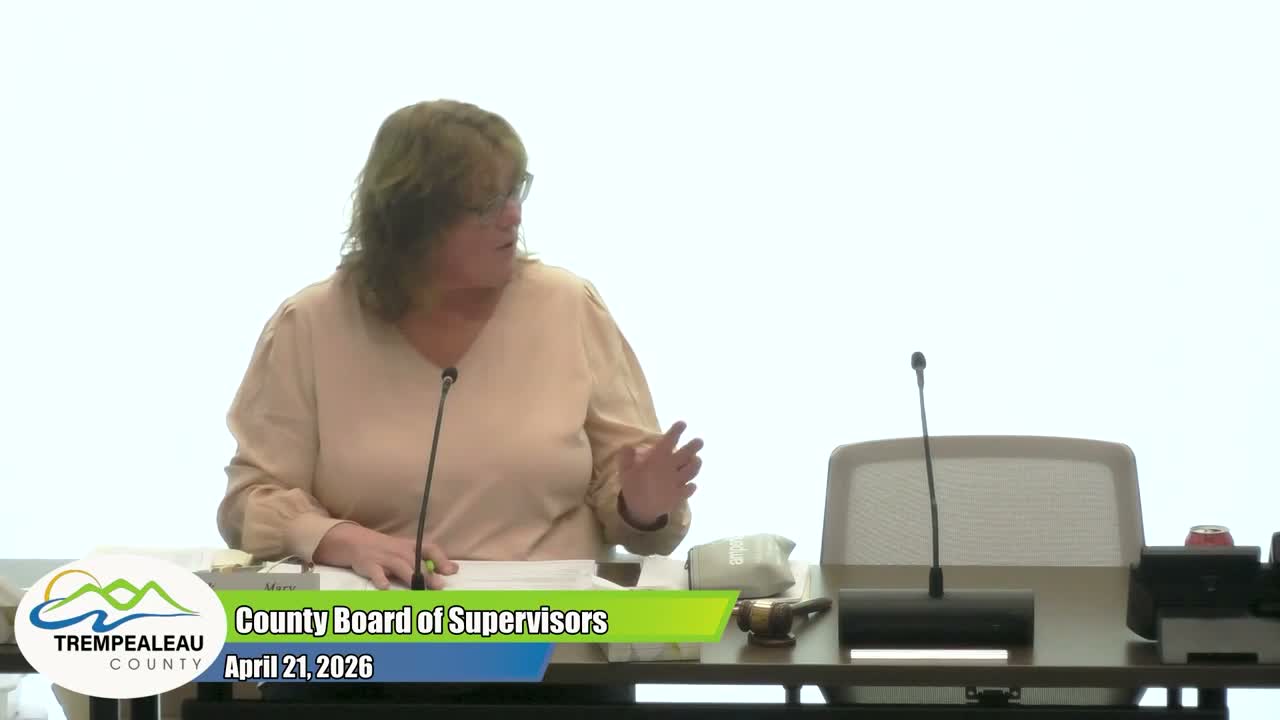
Susan, the county corporation counsel, delivered a detailed orientation for new and returning supervisors on the scope and limits of county authority, the county’s ethics and code-of-conduct provisions, open meetings law, and the mechanics of Robert’s Rules for motions and debate.
“Counties are unique because they are created under the Wisconsin Constitution,” Susan said, explaining that the board exercises only those powers designated by state law and local ordinance. She repeatedly referenced Chapter 59 as the statutory framework for county functions and directed supervisors to consult department heads and committees when a topic falls outside individual authority.
Susan emphasized open-meetings procedures and confidentiality for closed sessions. She explained that closed sessions are permitted for specific statutory reasons, must be entered by roll-call vote, and that matters discussed in closed session should not be disclosed publicly. She also covered the county’s ethics and code of conduct (chapter 2), the nepotism complaint process (2.07) and the availability of oversight remedies including censure or referral to the district attorney where appropriate.
The counsel also walked supervisors through common motion types under Robert’s Rules and the need for seconds on motions, noting that a chair’s role is to remain impartial and to facilitate orderly debate. The briefing closed with practical guidance on using county email for official business and handling public-records requests.
The session was framed as a high-level refresher and resource for follow-up questions; the counsel said she would circulate materials used in the presentation.