Get Full Government Meeting Transcripts, Videos, & Alerts Forever!
Get email alerts on the Public Safety Operations topic
No spam. Unsubscribe anytime.
Constable reports spike in service papers and flags new state requirements after Uvalde-related legislation
Summary
Constable Barnes told commissioners his office is about 50 service papers ahead year-over-year, noted large increases in truancy filings, and warned that legislative changes (including a shortened five-day service window and new equipment and PIO training mandates) could strain small precinct budgets and risk county fee revenues.
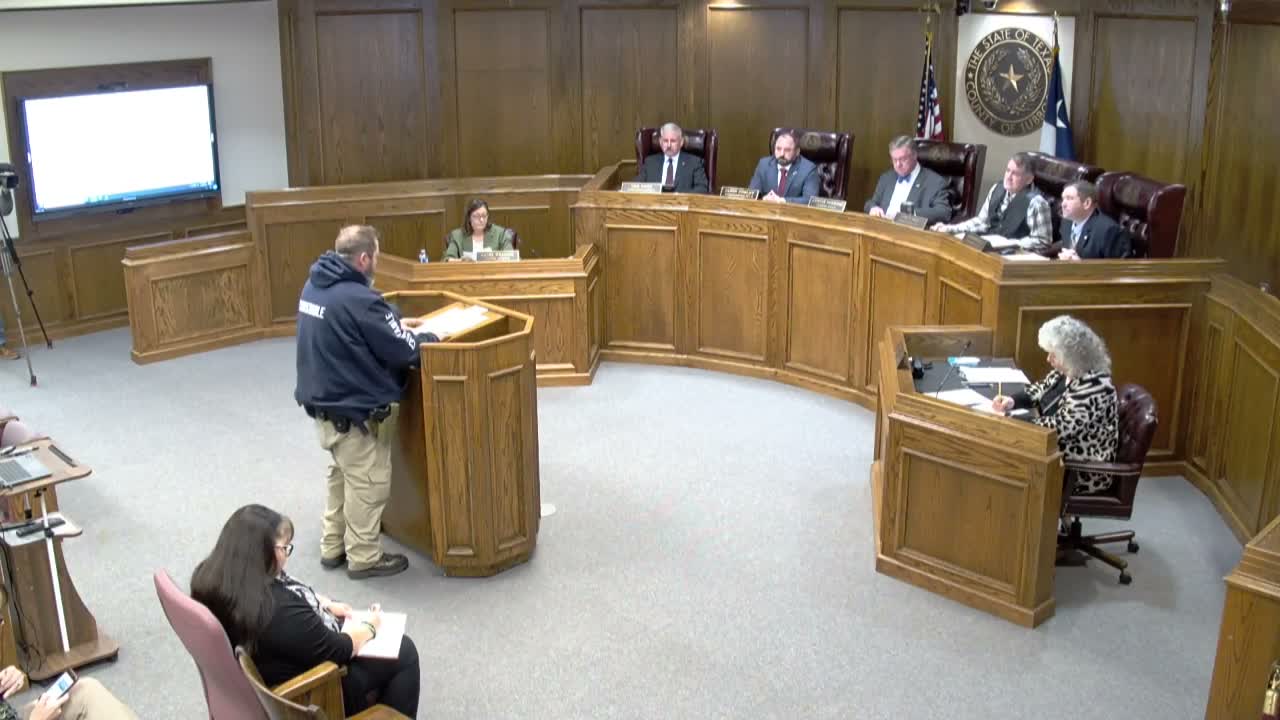
Constable Barnes (Precinct 2) gave a detailed operational report to the Commissioners Court on Jan. 27, describing a roughly 50-paper year-over-year increase in civil service work and sharp rises in truancy cases that have taken officers off street service duties and into court work.
Barnes said fees collected from service work have risen (from about $39,460 to $47,590 in the current fiscal run-rate when compared to the prior year) but warned new state rule changes and workload could erode that revenue. “So far to this point, we are 50 papers ahead of where we were,” Barnes said, noting many papers require multiple attempts and court attendance, which reduces time available for street service.
He outlined several legislative and regulatory changes linked to the Uvalde school shooting response, including new training and equipment expectations. Barnes said that agencies will now be expected to have a public information officer and additional training hours; TCOLE guidance is adding requirements for at least one Halligan tool and one ballistic shield per department or patrol vehicle. Barnes estimated the equipment could cost between $1,500 and $3,000 per item and warned his one-person precinct will need fiscal flexibility.
Barnes also said recent statutory changes shorten the allowable service window for eviction papers (now five days from filing, without exclusions for weekends or holidays), which could expose the county to repayment of filing fees and increase the use of off-duty, certified contract servers if the constable’s office cannot meet the tighter deadlines.
Commissioners asked follow-up questions about practical use of equipment and the fiscal impact. Barnes described the Halligan tool as a breaching device useful in certain entry scenarios and said he thought the ballistic shield requirement was practical, while the PIO training requirement seemed less feasible for single-officer departments without an interagency agreement.
The court thanked Barnes for the report; no formal action was required. Commissioners noted the implications for budgeting and interagency coordination with sheriff and police departments.