Get Full Government Meeting Transcripts, Videos, & Alerts Forever!
Get email alerts on the Municipal Finance topic
No spam. Unsubscribe anytime.
Crossville council rescinds vote on city‑run EMS after finance director warns of steep tax impact
Summary
After public comment and a detailed budget review showing large first‑year costs and possible near‑doubling of property tax rates under several scenarios, the Crossville City Council rescinded last month’s motion to create a city‑run EMS and voted to place the question on a November 2026 referendum.
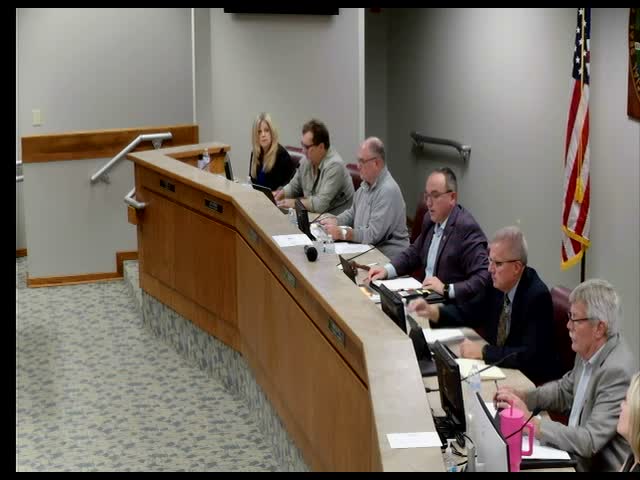
The Crossville City Council on a special call meeting rescinded a previous decision to create a city-run emergency medical service after a finance director’s presentation outlined higher-than-expected equipment, ambulance and staffing costs and warned of sizable tax increases to cover recurring shortfalls.
Finance Director Nathan Klaus told the council that earlier revenue projections from a billing service (which had ranged from $1.5 million to $2.2 million in net collections) would be sharply reduced when adjusted for historical collection rates. “By the time you look at what they projected we would receive…and take away the…the money that we would get from the hospital transports…our actual collections for those calculations will be about $556,000,” Klaus said, summarizing his cash‑flow estimate and noting the billed amounts are not the same as cash received.
Klaus also said procurement quotes and other updated estimates raised first‑year costs substantially above the prior presentation. He cited new equipment quotes near $790,000 (versus an earlier $350,000 estimate) and average ambulance costs near $279,000 (versus a previously cited $50,000 used‑vehicle figure), producing roughly $611,000 in cost increases over the earlier plan. Depending on the financing option, he estimated first‑year out‑of‑pocket expenses between about $3.78 million and $4.75 million and said the city would have to consider financing costs and recurring salary steps. “The best, the cheapest option is option 4, which is 58.95¢. That’s a 97% increase in property taxes,” Klaus said as an illustrative tax‑rate calculation; he emphasized these are projections and that the Tennessee Comptroller requires the city to avoid a structurally unbalanced budget.
Public commenters urged caution. Janelle Cochran asked, “Is this a need, or is this a want?” and urged council members to explain what deficiency in county EMS the city service would fix. Craig Clark, who described a recent cardiac emergency in which county EMS and hospital telemetry sped his treatment, said the county system ‘did miraculous things’ and asked the council to rescind the vote. Small business owners and a hospital chief likewise warned that higher property taxes could push businesses out of downtown or harm residents on fixed incomes.
Council members debated options including a 90‑day delay for additional study, referring the matter to a work session, or rescinding the previous motion outright. After discussion, the council voted to rescind the motion to proceed with a city‑run EMS and then approved a separate motion to place the question on the November 2026 referendum so voters can decide.
The meeting record shows the council agreed to the rescind motion and to send a referendum placement motion to the official calendar; the chair closed the special call meeting and the body recessed into its scheduled work session.
What happens next: council members said they expect additional financial detail and legal/operational clarifications before any implementation steps. If voters approve a city‑run EMS in a referendum, council members indicated the city would still need to secure certificates, equipment and approvals before operations could begin.