Get Full Government Meeting Transcripts, Videos, & Alerts Forever!
Get email alerts on the Extension Programs topic
No spam. Unsubscribe anytime.
UW Extension educators describe Rent Smart, Reentry Ready and new mental‑health training in Winnebago County
Summary
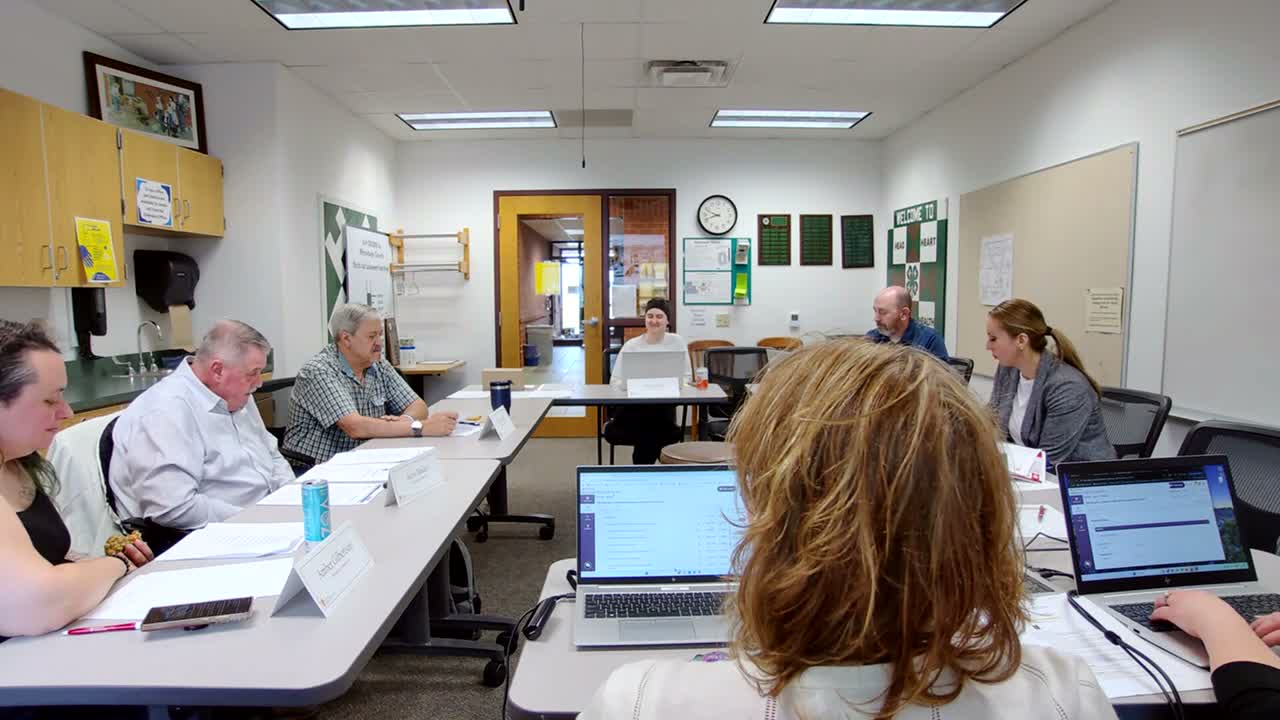
At its meeting, the Winnebago County UW–Madison Division of Extension committee heard reports on Rent Smart tenant and landlord training, Reentry Ready financial‑literacy programming and a planned mental‑health '101' curriculum for educators; staff also flagged a regional dairy‑educator posting and upcoming outreach pilots.
Doug Wenzel, an extension educator and state co‑chair for the Rent Smart tenant‑education program, told the Winnebago County UW–Madison Division of Extension committee that Rent Smart remains a core offering and that the program will pilot a landlord training in September at the Kauffman Center.
"I'm a state cochair for Rent Smart," Doug said, adding that the online series has registered more than "2,500 registrations since we started it" in July 2020. He said the proposed landlord training aims to be low‑cost compared with commercial offerings and that the extension program will seek attendance from landlord associations and housing coalitions.
Why it matters: Rent Smart and Reentry Ready are core local supports that aim to prevent evictions and improve housing stability. The committee heard details about delivery channels (in‑person and online), outreach plans to senior centers and shelters, and a pilot partnership with a tiny‑house village that has already received Rent Smart sessions.
Doug also reported on Reentry Ready, a financial‑literacy curriculum delivered inside correctional facilities and jails. "We're in 4 DOC prisons and 4 county jails," he said, and the program won a governor's award. He described plans to deploy six‑month follow‑up surveys to measure whether participants use the financial skills after release.
Katie, the health and well‑being educator filling in for an absent colleague, described forthcoming behavioral‑health work. "We have a few things on the calendar, that we're really excited about," Katie said, noting mental‑health first‑aid classes and a planned mental‑health "101" set of asynchronous modules to pilot with staff and educators; the goal is to produce a foundation course deliverable to community audiences.
Division administrator Joliana provided administrative updates and hiring information: the posting for a regional dairy educator closes April 21 and the position is expected to serve multiple counties. Joliana also noted recent Wisconsin Idea Week activities, budget visuals to illustrate spending lines, and an AV upgrade in facilities that appears to be functioning.
Committee members suggested outreach tactics such as placing program notices in senior‑center newsletters and leveraging community partners including Pillars Adult and Family Shelter, NOVA Counseling and local school programs.
Votes at a glance: committee members approved the minutes from the March 18, 2026 meeting by voice consent and later moved to adjourn; the next meeting is scheduled for 05/20/2026.
The committee will continue program planning and follow up on the landlord‑training pilot and the mental‑health training evaluation as staff gather more details.