Get Full Government Meeting Transcripts, Videos, & Alerts Forever!
Get email alerts on the Sewer Policy topic
No spam. Unsubscribe anytime.
Cheektowaga board tables proposed sewer inspection law after residents report basement flooding
Summary
The town tabled a local sewer‑law change after residents described recurring basement flooding and board members debated costs, DEC consent‑order obligations and whether town inspections should replace homeowner contractor work.
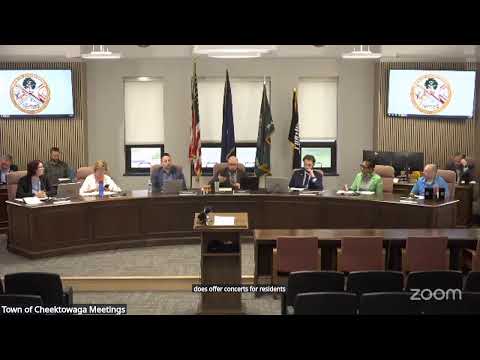
The Town of Cheektowaga on April 28 tabled a proposed local law that would expand town inspections and repairs of sewer laterals after residents raised flooding concerns and board members pressed for more details.
Resident Bruce Farno told the board he has spent about $15,000 on repairs and continues to see sewage-backed water enter his basement. "We spent $15,000 2 years ago on a repair job ... then on April 1 ... there was water coming in the basement all over the floor," Farno said in public comment, adding that he watched the manhole near his property repeatedly fill and then drop only when crews arrived.
Supervisor Brian Noah said the issue is already on the county and town radar: the sewer district has been cameraing lines as directed by prior county meetings and the town is following up on those inspections. He and other officials described a range of causes, from main-line problems to inflow and infiltration and laterals that may not meet state requirements under a DEC consent order.
Council members debated whether the town should require or perform additional inspections and repairs paid out of a townwide fee. Supporters argued that in past pilot years the town performed about a dozen such repairs at low per‑household cost; one sponsor said spreading a modest charge across the town could avoid large out‑of‑pocket costs for homeowners. Opponents said mandating inspections could shift large costs onto taxpayers and questioned whether the town would be responsible for many laterals during mandated door‑to‑door compliance work required by the DEC.
"We do have a DEC consent order and we had to go to the homeowners to make sure their laterals are proper," one council member said, urging caution about expanding obligations without a full plan. Council Member Vernon Thompson moved to table the local law to allow more study; the motion passed.
Next steps: the item was tabled for further review so the board can reconcile the town's obligations under state orders, the scope of any inspections or in‑house work, who bears costs in mixed sewer‑district areas, and the details of possible funding sources (including prior EFC/state grants and ARPA funding referenced during the meeting).