Get Full Government Meeting Transcripts, Videos, & Alerts Forever!
Get email alerts on the Poverty Reduction topic
No spam. Unsubscribe anytime.
Committee advances cradle‑to‑career grant program after contentious exchange over oversight and data
Summary
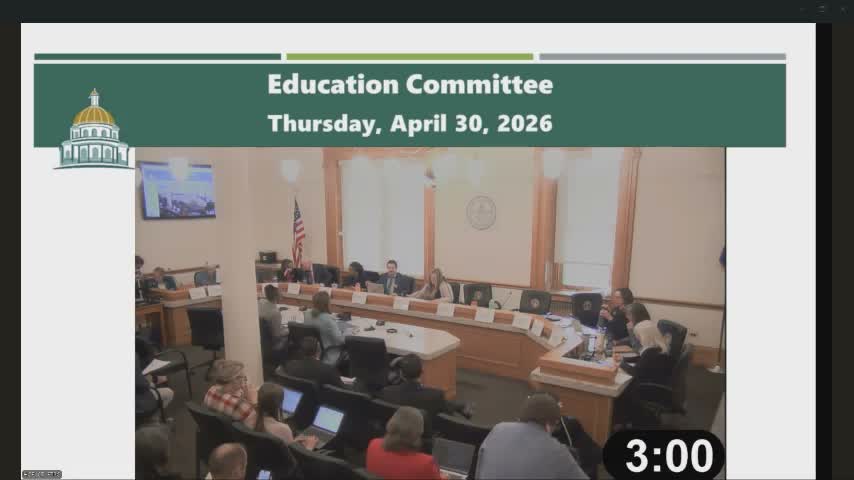
The House Education Committee approved Senate Bill 80, a cradle‑to‑career, place‑based grant program to be housed in the Department of Human Services and funded by donations and grants, by a 7–6 vote after extended testimony on community control, data sharing and guardrails; sponsors say the program will not operate until funding is secured.
Representative English and co‑sponsors described Senate Bill 80 as a cradle‑to‑career grant program intended to coordinate services from prenatal supports through workforce development, prioritize communities with concentrated need and fund local, community‑driven plans.
Supporters at the hearing included leaders from Harlem Children's Zone, the Colorado Children's Campaign, the Colorado Alliance of Boys & Girls Clubs and local nonprofits. Christian Rhodes of Harlem Children's Zone described the model as "cradle to career" and emphasized locally driven partnership; Maddie Asher (Colorado Children's Campaign) said the bill is an evidence‑based way to improve outcomes by aligning early childhood, health, K–12 and workforce supports.
Witnesses and committee members debated several recurring points: whether the program should live at the Colorado Department of Human Services rather than the Department of Education, what shared data systems and longitudinal tracking would look like, whether the bill created a new state entity or department, and how to ensure donations and private grants would not drive programming priorities. Sponsors repeatedly stressed the bill includes a fiscal mechanism: the program will not be operational until sufficient funds are raised and appropriated; the sponsor said the bill would rely on gifts, grants and donations and a contingent $900,000 cash‑fund allocation.
Representative Hamrick and other members urged clearer statutory guardrails on interagency coordination, data sharing and definitions of "high‑quality educational programming." Supporters said the intent is to be community‑led and to avoid duplicative silos of funding by giving communities a single accountable backbone organization to coordinate services. After debate, the committee voted 7–6 to send the bill to the Finance Committee.
What happens next: SB 80 goes to the Finance Committee for fiscal review and consideration of amendments; sponsors indicated there are conversations underway about possible amendments to address coordination and oversight concerns.