Get AI Briefings, Transcripts & Alerts on Local & National Government Meetings — Forever.
Fed Holds Rates at 3.5%–3.75%, Cites Energy Shock and Tariff Effects on Inflation
Summary
The Federal Open Market Committee left the target federal funds rate at 3.5%–3.75%, saying the stance remains appropriate while it watches elevated inflation driven by higher oil prices and tariff pass-throughs. Chair Jerome Powell said policy is not on a preset course and incoming data will guide future moves.
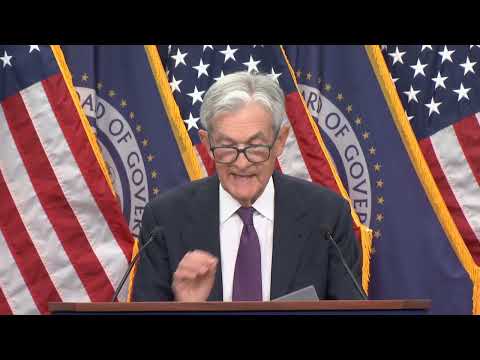
The Federal Open Market Committee decided to maintain the target range for the federal funds rate at 3.5% to 3.75%, and Chair Jerome Powell said the current stance of policy is appropriate to promote progress toward maximum employment and the Fed’s 2% inflation goal.
Powell told reporters the U.S. economy has been expanding at a solid pace, with consumer spending resilient and business investment brisk, but that housing activity remains weak and job gains have slowed; the unemployment rate was 4.3% in March. He said total personal consumption expenditures (PCE) rose about 3.5% over the 12 months ending in March and core PCE — excluding food and energy — rose roughly 3.2%.
“We see the current stance of monetary policy as appropriate to promote progress toward our maximum employment and 2% inflation goals,” Powell said, adding that higher global energy prices tied to the conflict in the Middle East have raised near‑term inflation and increased uncertainty for the outlook.
Powell cited tariffs as another driver of elevated goods-sector prices, describing tariff pass-through as a one-time increase that should subside over the next two quarters but warned that the evolution of energy prices is harder to predict. “With energy, it’s so hard to say… we’d want to see the backside of that and progress on tariffs before we even thought about reducing rates,” he said.
Reporters pressed why the policy statement retained language that had been interpreted as an “easing bias.” Powell said the committee had a vigorous discussion and that the number of participants favoring a more neutral stance had grown in the intermeeting period, but that the majority did not feel a guidance change was necessary this meeting; three members dissented over the guidance language, he said.
Powell stressed that monetary policy is not on a preset course and that future adjustments will depend on incoming data, the evolving outlook and the balance of risks, particularly developments in the Middle East and the path of energy prices.
What happens next: the Fed will continue to monitor data and market developments; Powell said the committee is well positioned to determine the timing and scope of any additional adjustments.