Get Full Government Meeting Transcripts, Videos, & Alerts Forever!
Get email alerts on the Public Land Affordable Housing topic
No spam. Unsubscribe anytime.
NACo presenter urges using city‑owned land for affordable housing; council presses for feasibility, staffing and lease safeguards
Summary
Patrick Spence of the National Association of Counties told Honolulu council members that repurposing publicly owned land can lower housing costs and yield deeply affordable units. Council members asked for feasibility studies, RFP templates and amendments to Bill 35 governing city leases.
Patrick Spence, program manager for economic mobility at the National Association of Counties, told the Honolulu joint committee on executive management and housing on Monday that cities and counties can use land they already own to reduce the cost of developing affordable housing.
Spence said land is a large component of housing prices and that placing projects on publicly owned parcels can cut per‑unit costs by roughly $150,000 in illustrative estimates. "If you have an issue of a shortage of affordable housing and you start looking at free land, land you already own, there's an opportunity to leverage that for affordable housing that doesn't actually cost taxpayer dollars," he said.
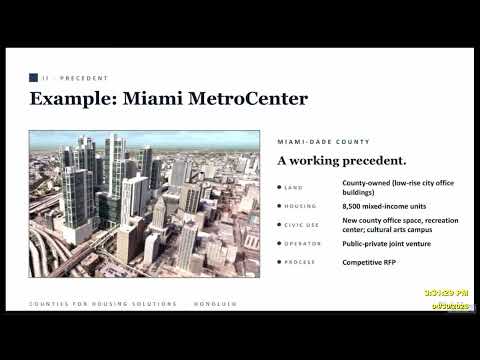
The presentation drew on large examples, including Miami‑Dade County deals that converted county office buildings and parking lots into thousands of residential units under long ground leases with private master developers. Spence described a Pearl Ridge site near the Skyline station as a possible pilot that could accommodate about 600 units and include community facilities such as child care and a senior center.
Council members pressed for local detail and implementation steps. Council member Toba asked whether park land or parking structures near Waipahu rail stations had been considered; Spence and Gavin Thornton, housing policy director for the Department of Housing and Land Management, said transit‑oriented development is part of the strategic housing plan but that feasibility depends on parcel size, demolition costs and site‑specific economics.
Council member Dos Santos Tan asked about the financing stack, including soft costs and whether municipal bonds or other public financing were used in comparable deals. Spence said many large deals used private financing and 99‑year ground leases with master developers; he recommended detailed RFPs and predevelopment conversations with local builders to test what will "pencil out." He cautioned that the mix of unit types and pre‑leased uses (for example, senior housing) will change which AMI bands are feasible.
Chair Waters said Spence had shared Miami‑Dade RFPs and encouraged DHLM to use them as templates rather than starting from scratch. Council members also asked when DHLM would provide amendments to Bill 35 — the bill discussed during the meeting that would change leasing authority for city properties — and DHLM said deputy director Kat Tashner was working on proposed changes and that the department would follow up.
Gavin Thornton said DHLM is focused on priority sites (the briefing frequently referred to Veil Lea/Weil Lea/Veil Lea as a priority in the transcript) and acknowledged capacity constraints for running multiple feasibility studies simultaneously. Thornton said Director O'Shea will provide a fuller informational briefing on the department's work when he returns.
The committee recorded no formal votes; no public testifiers registered in person or remotely. The meeting concluded with cochairs thanking the presenters and adjourning at 4:20 p.m. The committee asked DHLM to report back on Bill 35 amendments and for staff to consider the RFP and feasibility steps Spence recommended.