Get AI Briefings, Transcripts & Alerts on Local & National Government Meetings — Forever.
Montgomery County committees approve HIF rental assistance plan, keep contingency to shield against HUD funding cuts
Loading...
Summary
The joint Health & Human Services and Planning, Housing & Parks committees approved the executive'recommended FY27 Housing Initiative Fund rental assistance package and kept a 15% contingency to prepare for possible federal HUD funding reductions that could affect hundreds of residents.
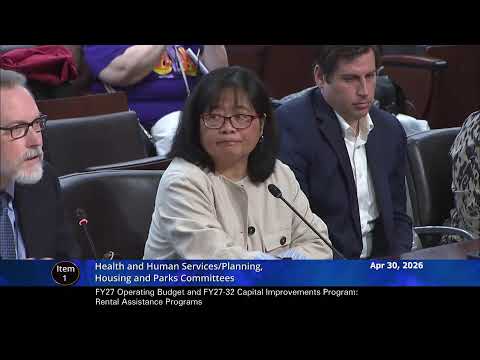
The joint convening of Montgomery County Council committees on the Housing Initiative Fund (HIF) approved the executive'recommended FY27 rental assistance package and retained a 15% contingency to help the county respond to potential cuts in federal housing funding.
Scott Bruton, director of the Department of Housing and Community Affairs, told the committees the HIF budget for rental assistance totals about $28.3 million of the HIF's $52.3 million operating budget and recommended leaving the contingency in place rather than preallocating those funds. "We recommend that the contingency be left as is," Bruton said, arguing the funds can support rental assistance contracts, extend MPDU agreements and finance production or preservation of affordable housing if revenue materializes.
The contingency is budgeted at approximately $4.3 million (about 15% of the rental assistance total). Christine Hong, chief of Services to End and Prevent Homelessness, urged keeping the contingency amid looming federal changes she said could reduce HUD renewal funding and leave local programs underfunded. "It is likely 40% of our federally funded housing programs will be cut in 2026," Hong said, adding that would affect housing for roughly 350 people and that contingency could be part of a plan to replace lost federal dollars.
Councilmembers pressed staff about alternatives, including a staff proposal to reduce the HIF contingency by $1.4 million (bringing it to about a 10% level) to offset general fund rapid rehousing costs. Staff said that option would free general fund dollars but would limit HIF flexibility to respond to unexpected needs. Several councilmembers, including Giordano and Luedtke, expressed concern about destabilizing current beneficiaries and favored maintaining flexibility.
Representatives from the Housing Opportunities Commission explained program-level shifts inside HOC: Ken Silverman, vice president of government affairs, introduced Davita Rowley, vice president of resident services, who described reallocations to the Community Choice Homes program (which serves people with disabilities and has higher retrofit and rental costs). Rowley said the change required moving funds from smaller programs such as Youth Bridge and Move Up to meet current demand in Community Choice Homes.
After discussion, staff summarized the committee decision: approve the executive'recommended HIF-funded rental assistance allocations for FY27 and keep contingency at the 15% level. The chair called for objections; none were raised and the committee adjourned.
The committee also asked staff for additional budget detail on recordation tax collections and projected carryover; staff estimated a roughly $3.3 million carryover subject to loan closings and said final figures would be provided. The matter will proceed to full council review next week per the established schedule.